What Is Crystal Label Printing (Digital Crystal Label / Crystal DTF)?
Crystal label printing, also called digital crystal label printing or crystal DTF, is a UV DTF printing process used to create premium no-background transfer labels for bottles, cups, packaging, gifts, acrylic, glass, metal, and custom products. It combines UV printing technology with film transfer techniques to produce high-quality, durable labels with a clean, glossy, and premium appearance.
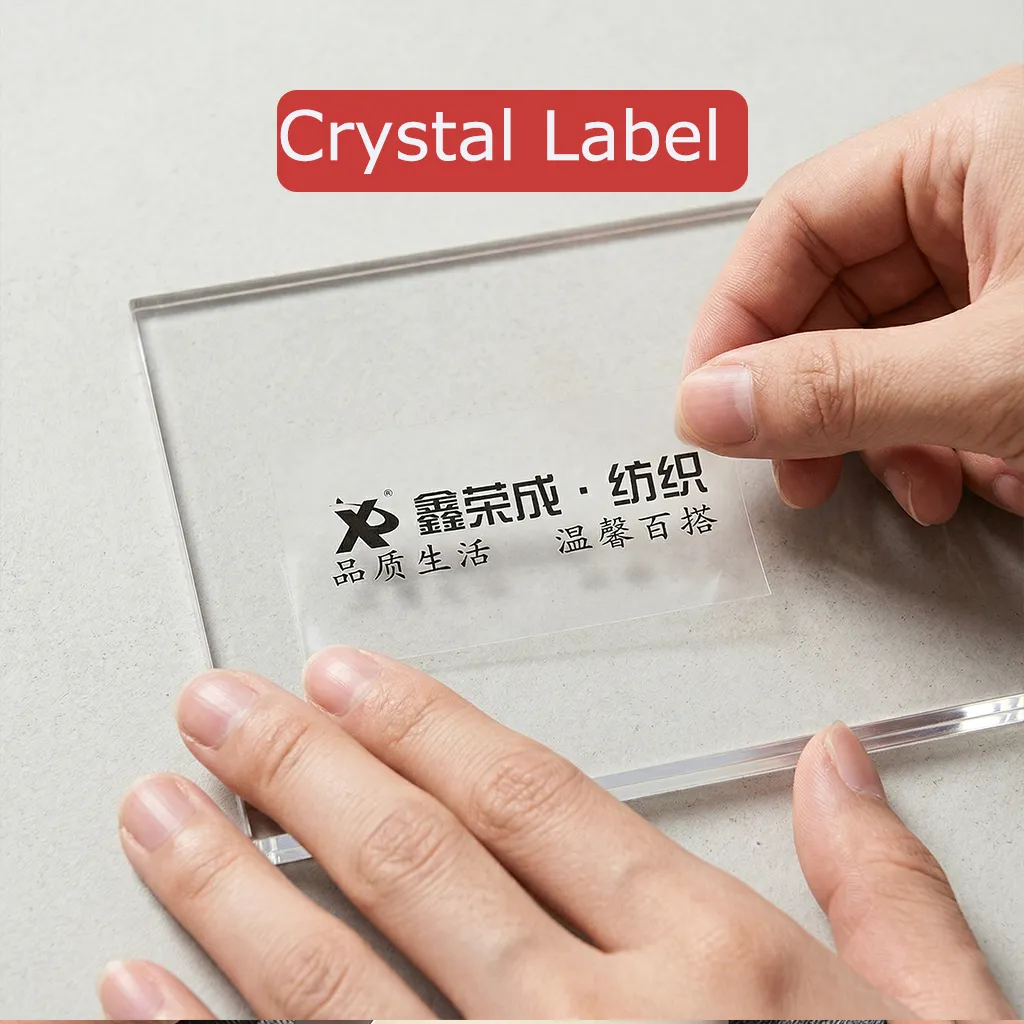
The key feature of crystal label printing is the “peel-and-stick” transfer method. After application, only the printed design remains on the surface, without any visible backing film, achieving a result similar to direct printing on the product.
The crystal label printing process involves printing multiple layers—white ink, color ink, and varnish—onto a special release film (Film A) using a UV printer. Each layer is instantly cured by UV light to ensure durability and precision. After printing, a transfer film (Film B) is applied to protect the design and enable easy transfer onto various materials.
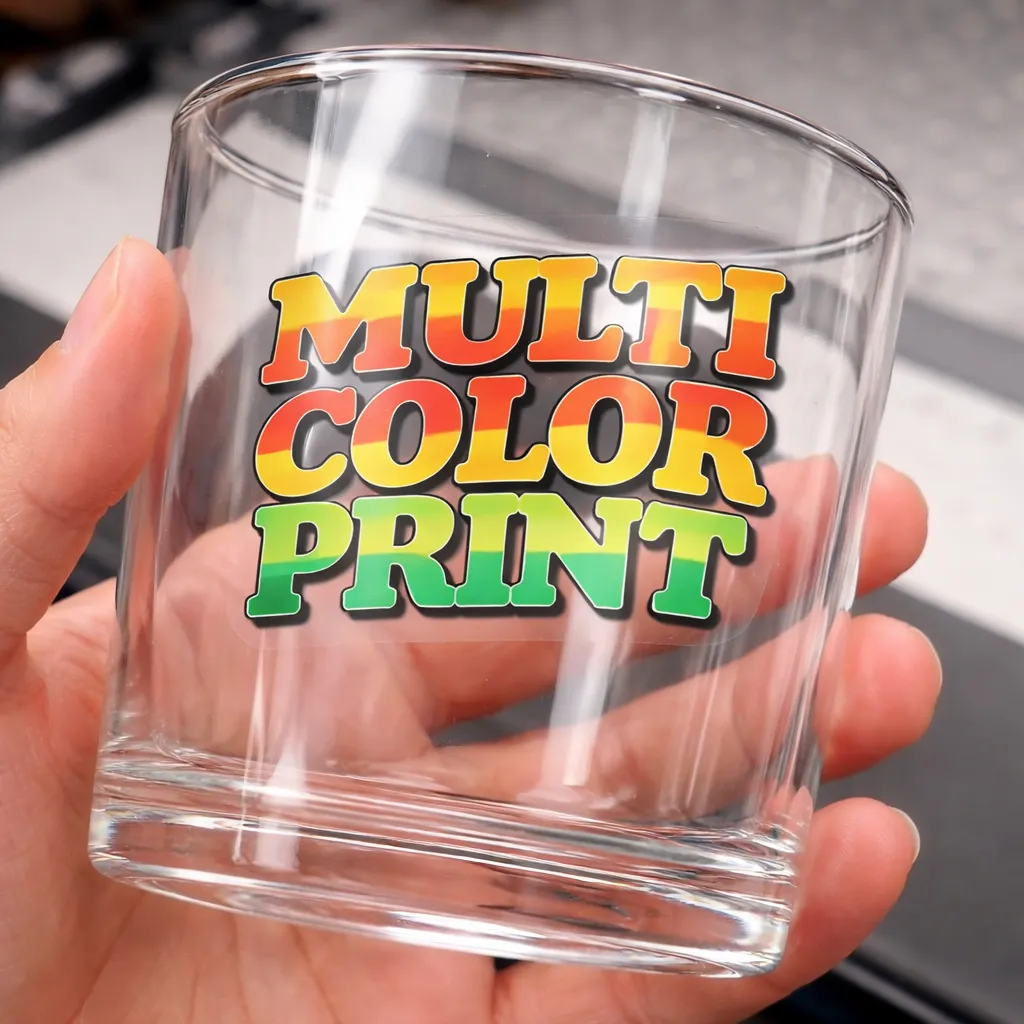
Thanks to this layered UV printing method, crystal labels can achieve a slightly raised 3D texture (typically 0.1–0.5 mm), while the varnish layer provides a glossy, crystal-clear finish, giving the label its distinctive premium appearance.
Crystal label printing is widely used for photos, artwork, logos, and decorative designs that need a clean and premium look. Instead of curing UV ink directly on acrylic, the design is first printed on UV DTF film and then transferred onto the acrylic surface. This process creates bright colors, a smooth glossy finish, and a no-background label effect. Crystal labels can be used for shop signs, home photo panels, custom awards, gift items, and branded display products. Each piece looks high-end, modern, and durable for customized decoration.
Transfer stickers are a popular choice for custom branding and decoration. Compared with traditional screen printing and self-adhesive labels, crystal UV printing offers a faster and simpler production process. It allows flexible customization with high-resolution colors and quick turnaround times.
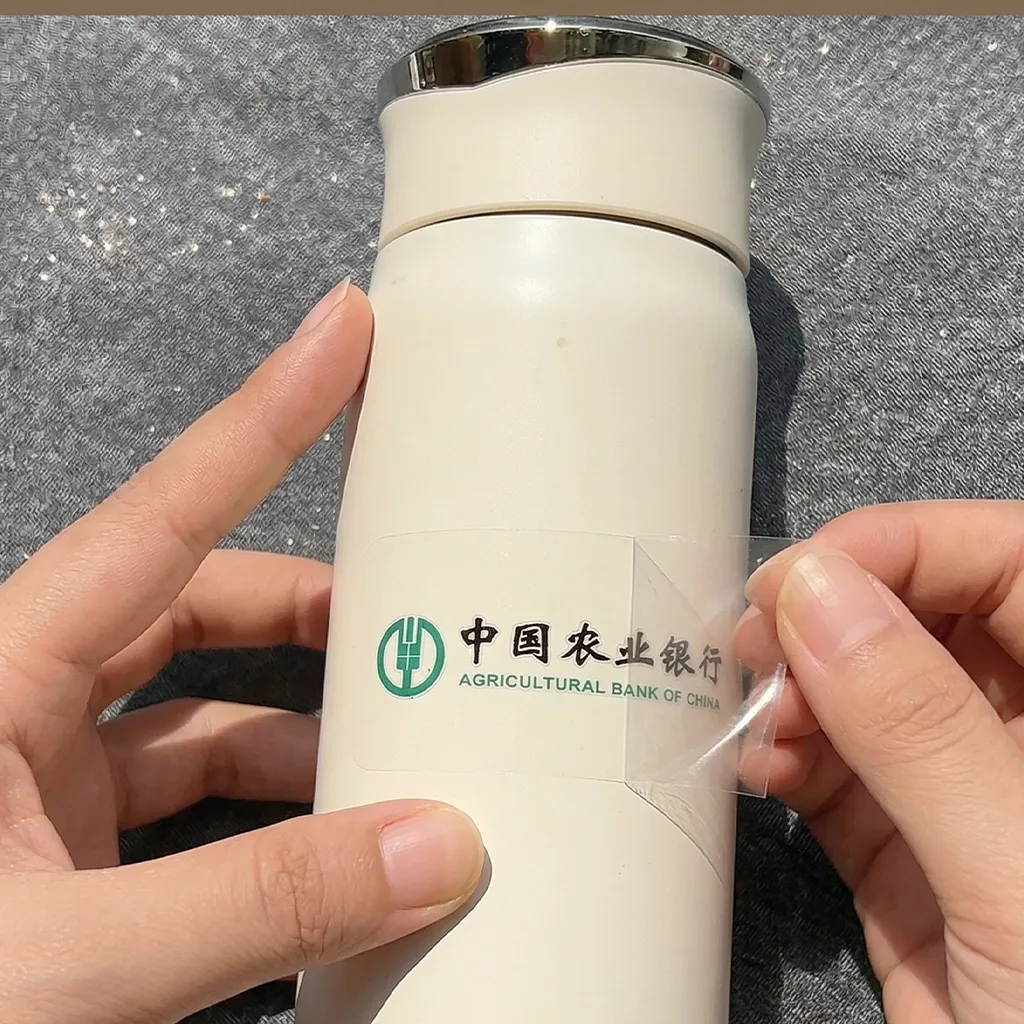
These transfer labels can be applied to most flat and hard surfaces. Just peel off the backing film, place the sticker on the desired area, press firmly to ensure full adhesion, and then remove the transfer film. The application is clean, easy, and ideal for personalized products or small-batch orders.
Advantages of UV Crystal Labels (Digital Crystal Label / Crystal DTF)
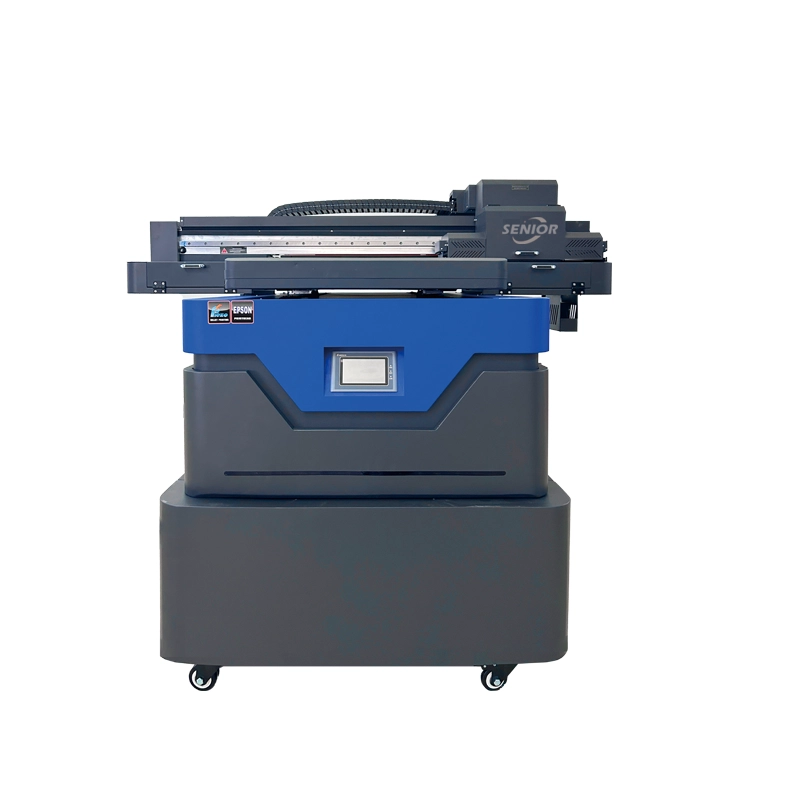
UV crystal labels offer a modern, flexible, and eco-friendly alternative to traditional labeling methods. Using a UV6090 printer and crystal DTF (Direct to Film) technology, these labels provide exceptional quality and convenience for custom products.
Key Advantages:
- Eco-Friendly Production
The UV printing process, using either AB films or direct adhesive printing, eliminates the need for traditional silk-screening or repeated color layering. No large-scale setup or plates are required, making it environmentally friendly and suitable for single-piece crystal label printing.
- Easy and Flexible Application
UV crystal labels are simple to use. Once printed, they can be directly applied to your products without high-temperature baking or additional machinery. The 3D embossed effect integrates beautifully with surfaces, creating a delicate, premium look that other methods cannot achieve.
- Time and Location Flexibility
Unlike silk-screened labels, UV crystal labels do not need to be printed directly onto the item during production. Once printed, they can be stored and applied whenever and wherever needed, making personalized and small-batch customization extremely convenient. Their compact size allows for easy transport and flexible use.
- Versatility and Scalability
Whether for small-batch custom projects or large-scale production, UV crystal labels meet diverse needs. The technology supports innovative and specialized designs, giving products a unique and high-end finish.
- High-Quality Finish
Every UV crystal label printed via crystal label printing has vibrant colors, sharp details, and a durable finish resistant to water, scratches, and UV light. Perfect for premium branding and applications on glass, metal, acrylic, plastic, and wood.
Summary: Using UV crystal label printing with crystal DTF technology delivers eco-friendly, convenient, and visually striking labels, making it ideal for modern crystal label printing projects.
For smaller UV DTF crystal label production, phone cases, cups, bottles, and small custom products, a compact A3 UV printer can be a practical choice.
Case Steps for Applying Digital Crystal Label on a Cup
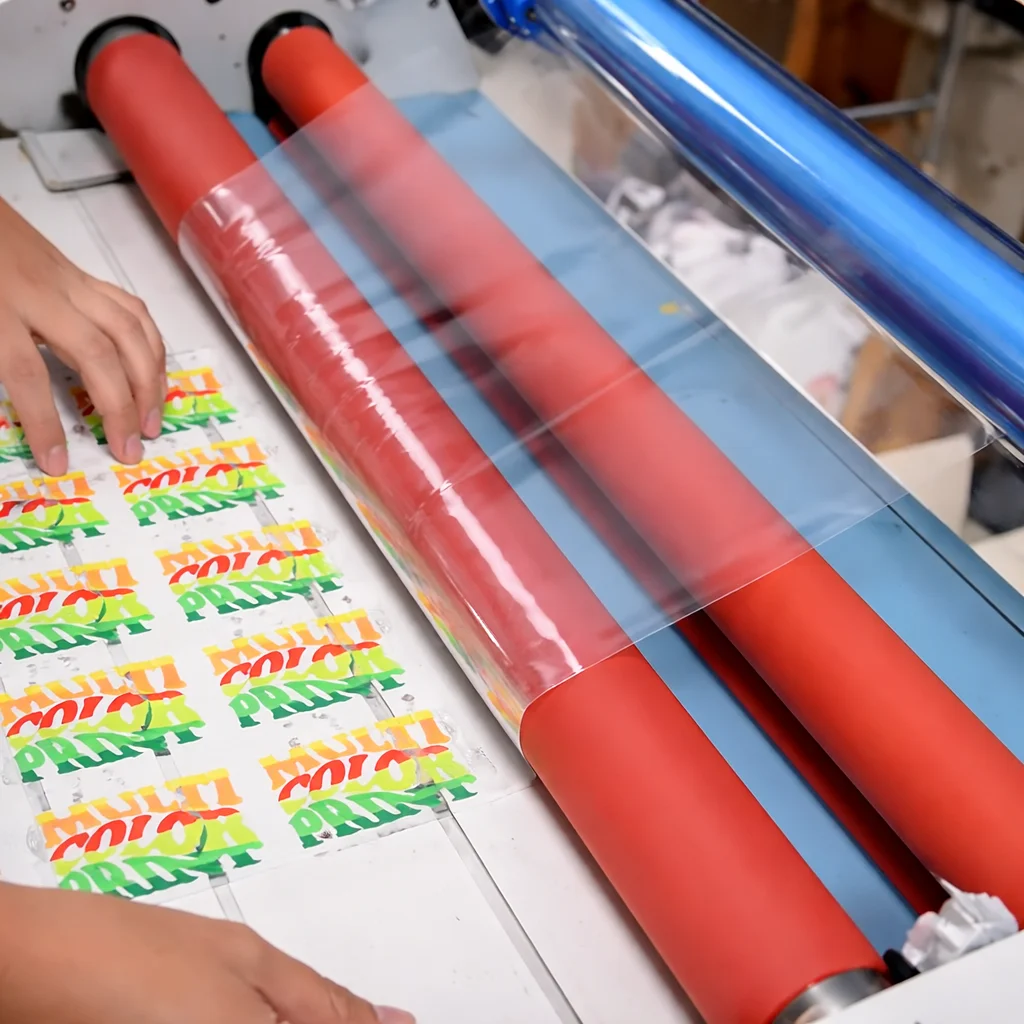
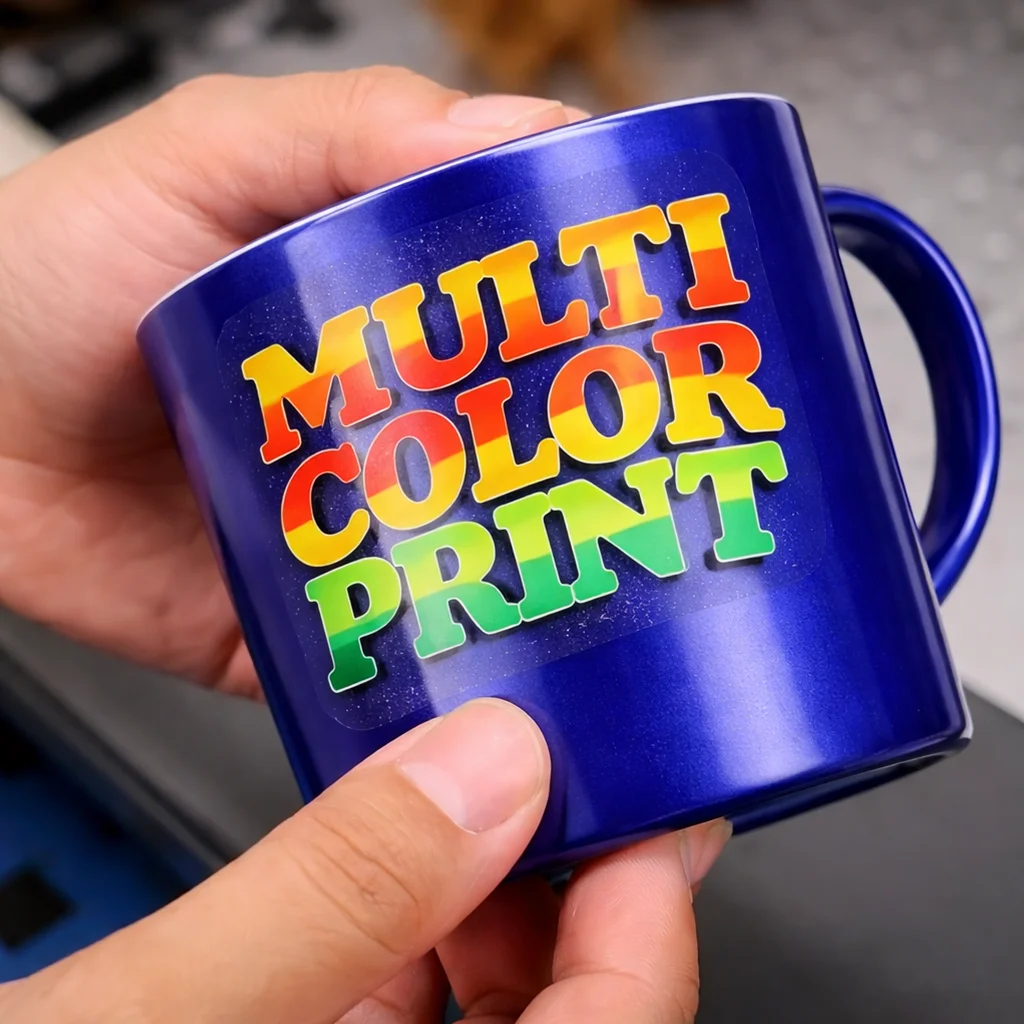
First, print the digital crystal label using a UV printer, then cut it to the desired size. Peel off the backing, place it on the cup surface, and press gently to fix it in place. Finally, remove the transfer film. The digital crystal label is three-dimensional and visually appealing, easy to apply, requires no high temperature or mechanical assistance, and is perfect for personalized customization.
How Crystal Label Printing Works on Acrylic
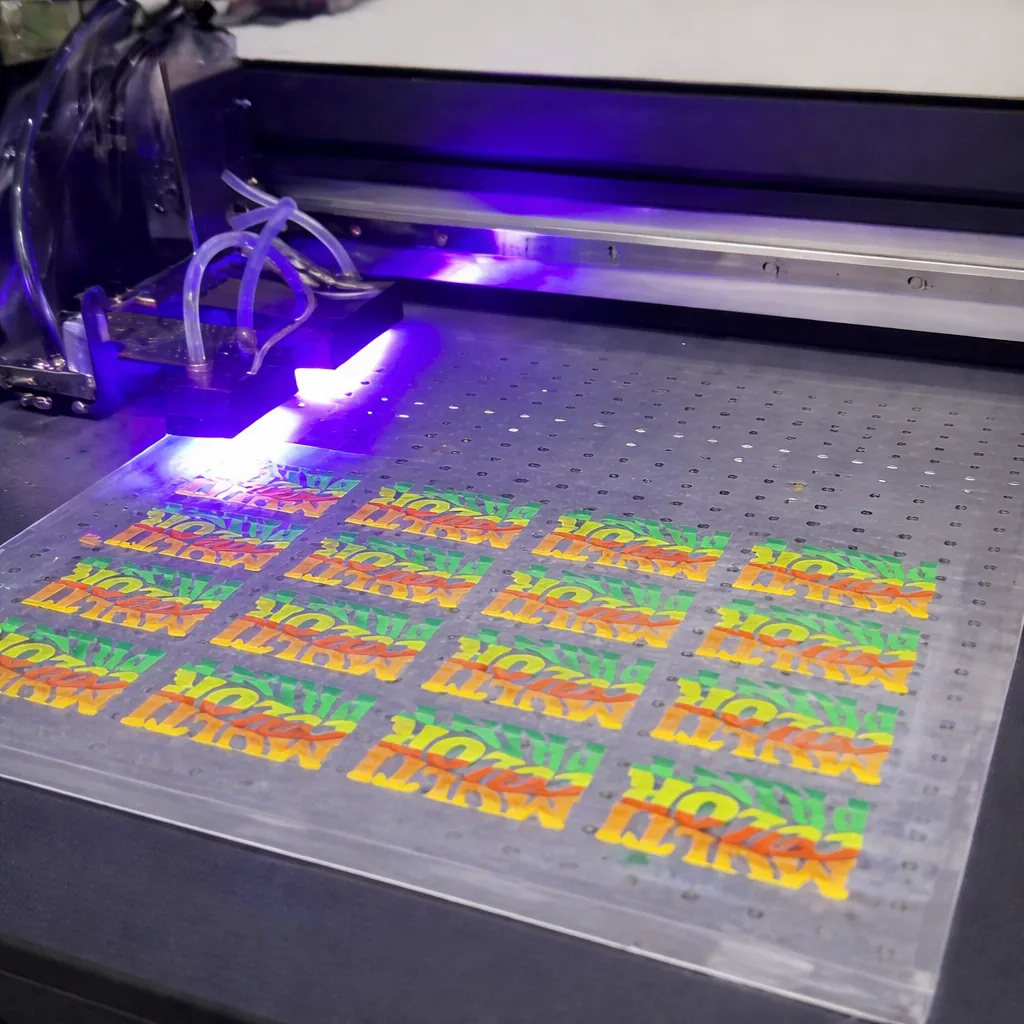
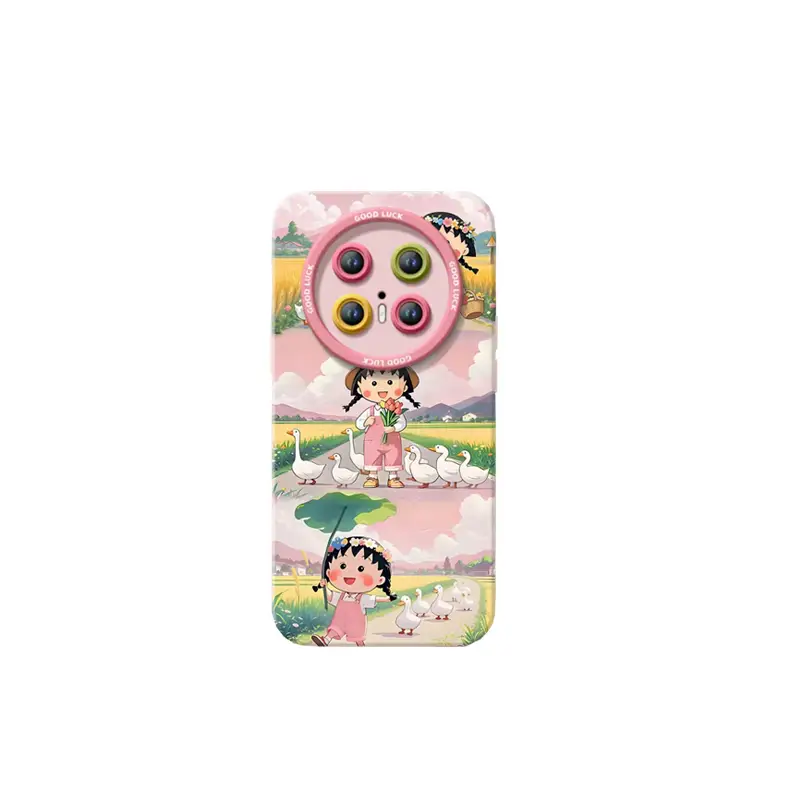
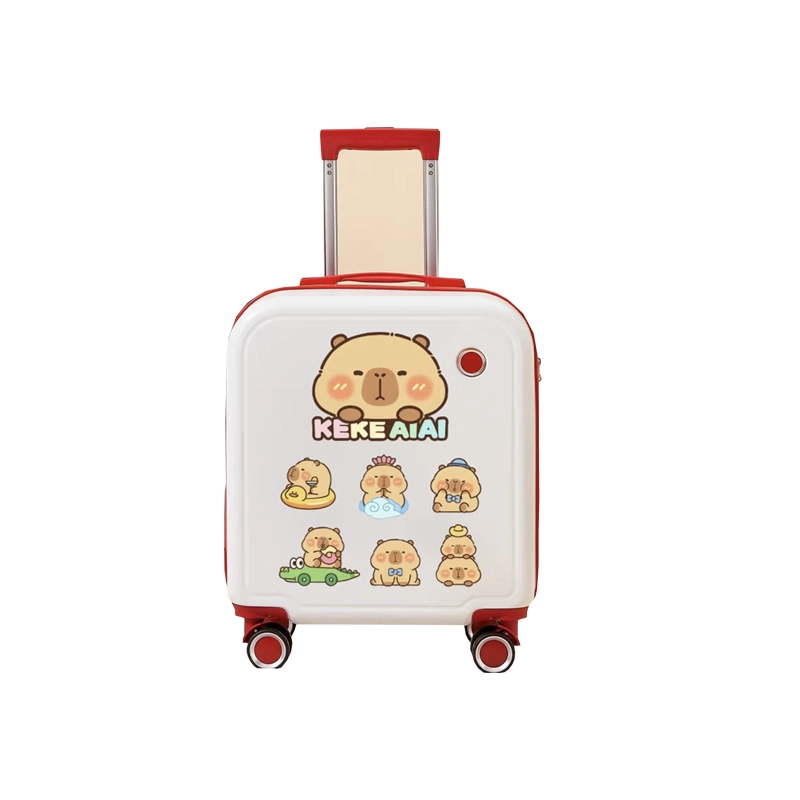
Crystal label printing can be used on acrylic products to create clean, glossy, and no-background transfer labels. Instead of printing directly onto the acrylic surface, the design is first printed on UV DTF A film with white ink, color ink, and varnish, then laminated with B film and transferred onto the acrylic product. This method is suitable for acrylic signs, gift items, display boards, nameplates, and customized branding products.
Step-by-Step Crystal Label Printing Process With UV DTF(with UV6090 Printer)
Step 1: Prepare the Materials
To create a high-quality crystal label, you’ll need two key materials:
- A film—Available in two types: transparent PET base and resin base.
- B Film—Also known as transfer film or positioning film, available in 1-inch and 3-inch widths. Both have the same effect; the only difference is size.
Tip: Using self-adhesive A film simplifies application, while non-adhesive A film can be used with additional glue or transfer steps.
Step 2: Printing on A Film
- Lay the film flat – Ensure no wrinkles or bubbles.
Place the A-film evenly on the 6090 UV printer platform. Make sure it’s smooth with no bubbles or wrinkles. - Remove the protective layer.
Peel off the thin protective layer from the surface. This layer is only for protection and must be removed before printing. - Print the design.
Under the protective layer is a sticky coating where the design will be printed.
Print your artwork directly on this adhesive side using the white + color + varnish (white/color/gloss) mode.
This ensures rich colors, smooth texture, and a high-gloss finish that enhances depth and dimension.
Process Description: Use a UV6090 flatbed printer to print the crystal label pattern onto the A film with self-adhesive, ensuring vivid colors and rich layers.
Step 3: Lamination with B Film
- Load the B film.
Mount the B film onto the laminator. Choose the width that fits your design—1 inch or 3 inches. - Laminate Without Heat
Lamination does not require heating. Simply overlay the B film onto the printed A film surface using the laminator.
Ensure even pressure and alignment to avoid bubbles or shifting.
Process Description: The printed crystal labels are then covered with a release film (B film) using a heat press to form a complete transfer assembly.
Step 4: Cutting and Applying Crystal Labels
After printing and laminating, use scissors to cut the crystal labels into individual designs—no special cutter needed.
Peel off the bottom layer, place the label backside down on the target surface (e.g., a thermos cup), press firmly, then remove the transfer film. The label stays in place, completing the “leave-the-design, remove-the-film” process.
Step 5: Applications of Crystal Labels for Custom Products
Using a 6090 UV flatbed printer, you can create 3D crystal labels with excellent clarity and durability.
They are ideal for customizing products such as:
- Clothing & Fashion Accessories – Tags, badges, embellishments
- Product Packaging – Bottles, boxes, premium labels
- Home Décor & Crafts – Acrylic ornaments, decorations
- Industrial Nameplates & Logos – Electronics, machinery
- Various Materials – Glass, metal, acrylic, plastic, wood
These labels are perfect for small-batch customization and high-end branding, offering a glossy, professional finish on multiple surfaces.
Step 6: Why Use a 6090 UV Printer for Crystal Labels
A 6090 UV printer delivers precision, color depth, and efficiency.
By combining A film and B film, you can achieve glossy, embossed-style crystal labels without traditional molding or complex production steps.
It’s the ideal solution for small-batch customization and high-end branding.
If you need stable production for crystal labels and raised transfer logos, the 6090 UV printer for crystal label printing is suitable for UV DTF film, AB film, and customized label applications.
Future of UV machine
UV printing will get smarter. It will add sensors, lights, and interactive parts. It will become more eco-friendly. It will go beyond decoration.
Conclusion
UV machines on acrylic give bright colors, strong durability, and texture. Companies use it for signs, displays, and branding. It saves time and materials. It fits small batches and creative ideas.
Frequently Asked Questions
Q: What is AB film?
A: AB film is the key material for UV DTF printing.
A film carries the printed image.
B film provides the adhesive layer.
A flatbed printer UV system prints the design onto an A film.
The UV flatbed printing machine cures the ink instantly.
You laminate. A film with a B film to form a ready-to-apply crystal label.
The result is clean, strong, and easy to transfer.
Q: Why choose UV DTF instead of traditional UV printing?
A: UV DTF works on more surfaces.
It sticks well to glass, metal, acrylic, wood, and plastic.
Traditional UV printing may peel on low-energy surfaces.
UV DTF needs no primer.
You print, laminate, and apply.
It creates a raised, crystal-like finish.
A UV flatbed inkjet printer produces sharp and detailed prints.
The process is simple and efficient.
Q: How durable are crystal labels?
Crystal labels resist scratches.
The UV varnish protects the surface.
They bond firmly and do not fall off.
They resist water and moisture.
They withstand sunlight without fading.
They stay bright and clear for a long time.
They handle daily use and mild chemicals well.
What is a digital crystal label?
A digital crystal label is a UV DTF transfer label printed with white ink, color ink, and varnish on A film, then laminated with B film. After application, only the printed design remains on the product surface, creating a clean, glossy, no-background crystal label effect.