

What is a UV DTF Printer?
A uv dtf printer, fully known as an Ultraviolet LED Inkjet Printer, is a digital printing device that uses UV ultraviolet light to instantly cure ink. This printing process is called UV printing.
The basic principle of UV printing is:
The printhead sprays specialized UV ink onto the material surface
UV lamps irradiate the ink simultaneously during ejection
The ink cures within an extremely short timeframe and bonds firmly to the substrate
By adjusting the wavelength, intensity, and exposure time of UV light, UV printers can adapt to various materials, achieving high-precision printing with strong adhesion.
Similar to digital devices like DTF printers, UV printers also possess distinct advantages and limitations.
Main Types of UV DTF Printers
Early UV printers primarily included three types:
uv flatbed printer for sale
roll to roll flatbed uv printer
uv roll to roll printer
UV Non-Planar/Curved Surface Printers
In response to evolving market demands, more specialized equipment has emerged in recent years, such as the Digital Cylinder UV Printer. This device is specifically designed for 360° printing on cylindrical or conical products like bottles and cups.
Advantages of DTF UV Printer
Wide Application Range and Strong Material Adaptability
dtf uv printer are widely used across multiple industries, such as:
Advertising signage
Home Decor
Custom Packaging
Gifts and Personalized Designs
Printable materials include but are not limited to:
Wood, Glass, Crystal
PVC, Acrylic, Plastic
Stone, Leather, Metal, etc. Acrylic, Glass, Metal, Wood, Plastic (ABS, PC, PVC, etc.), Ceramics, Leather, Stone, and even some specially coated materials
Prints feature rich colors and sharp details, faithfully reproducing original designs.
With technological advancements, desktop uv printer now extends beyond rigid materials. UV DTF technology enables transfer printing onto flexible or irregularly shaped items like EVA slippers and PVC balls, further expanding its application scope.
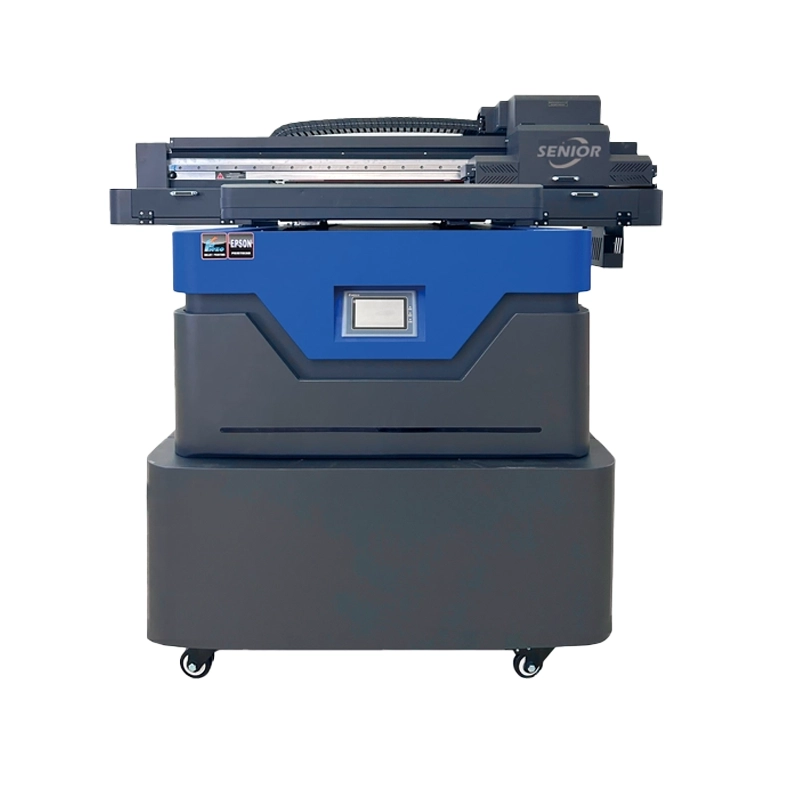
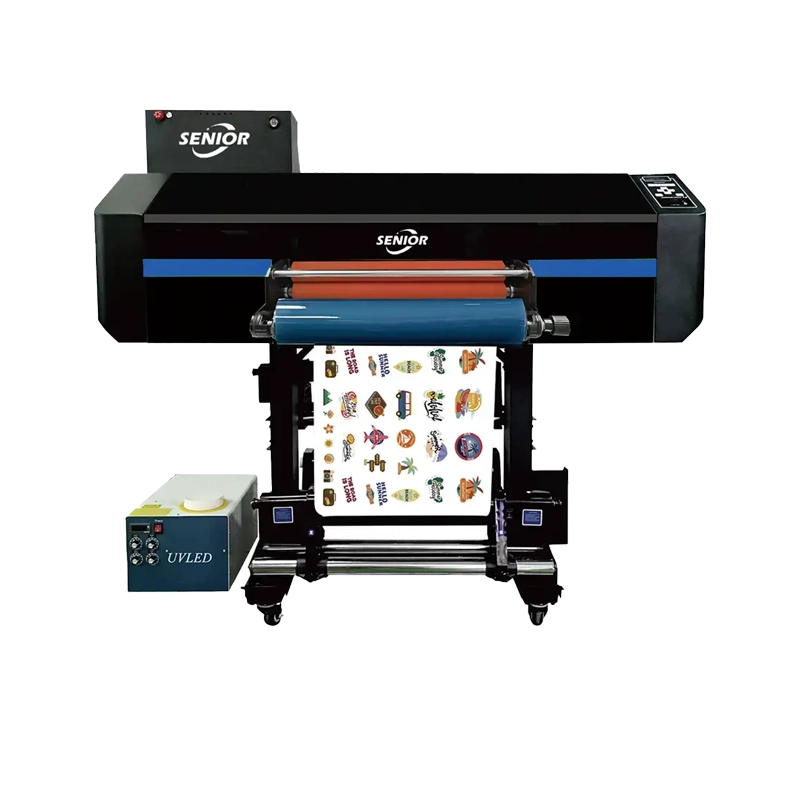
china uv printer 6090 uv roll to roll printer
Simple operation with no plate making required
As a digital direct-to-surface process, dtf uv printer eliminates the need for plates. Whether printing monochrome patterns, gradients, or complex color designs, direct printing is achievable.
The basic workflow is as follows:
Design the pattern on a computer
Set up white ink functionality in the printing software
Place the material on the printing platform
Click to start printing
· Fast initial investment return: Although the unit price of equipment may be high, its broad applications, short production process, and minimal labor requirements enable rapid market response, resulting in a high return on investment.
· Low overall cost: Eliminates the costs of intermediate materials and processes such as plate making, film, and registration adjustments.
· Exceptional flexibility:
· Variable content: Each product can feature unique designs (e.g., personalized photos, individual serial numbers).
· Rapid job changeovers: Switching print tasks requires only file selection on the computer, with minimal downtime.
Intuitive operation and quick learning curve make it ideal for small-batch and customized production.
Meets Highly Personalized Customization Needs
UV printers allow real-time design file modifications, enabling printing starting from a single piece with instant changes.
Printed products feature high resolution and sharp edges, making them particularly suitable for:
Personalized gifts
Custom packaging
Brand samples
Small-batch, multi-style production
High Precision & HD Quality: Utilizes high-resolution print heads to achieve photo-level image detail and crisp text.
· Rich colors and gamut: Utilizing CMYK + white ink + varnish (or additional spot colors) delivers vibrant hues, high contrast, and special effects like white printing or transparent raised varnish.
· Diverse finishes: Effortlessly achieves 3D embossing, matte textures, mirror-like gloss, and more, significantly enhancing product value and artistic appeal.
For customers who need to produce crystal labels, acrylic signs, metal plates, and raised logo effects, a 6090 UV flatbed printer provides a practical solution for small-batch customization and premium product decoration.
Instant Curing: UV inks cure instantly (within seconds) under specific wavelength UV lamps, allowing immediate stacking, cutting, packaging, or further processing upon printing.
· Seamless Workflow: Eliminates lengthy natural drying or baking times, drastically shortening production cycles—ideal for fast turnaround and high-volume production.
· Plate-Free Printing: True to digital printing’s essence, it enables single-unit production, transforming computer files into finished goods in one step. This makes it particularly suitable for small-batch, multi-variety, and customized orders.
roll to roll flatbed uv printer
Exceptional Durability of Finished Products
Thanks to UV-cured ink, printed patterns exhibit outstanding:
Scratch Resistance
Water Resistance
Fade Resistance
They remain undamaged by time, environmental factors, or minor friction, ensuring extended longevity.
· Superior physical and chemical properties: The cured ink layer exhibits outstanding resistance to abrasion, scratches, water, chemical corrosion (e.g., alcohol wiping), and fading, making it suitable for long-term outdoor use.
· Strong adhesion: Through specialized inks and appropriate coating treatments, the ink bonds tightly to the substrate, preventing peeling.
· Eco-friendly and safe:
· Ultra-low VOC emissions: UV inks are 100% solid content, releasing virtually no volatile organic compounds during curing.
· Low energy consumption: LED-UV curing systems consume only 10%-20% of the energy used by traditional mercury lamps while generating minimal heat.
· Zero Waste: Digital on-demand inkjet printing eliminates pollution from traditional printing processes like machine cleaning and waste materials.
Digital Cylinder uv flatbed printer for sale Enable 360° Printing
Digital Cylindrical UV Printers upgrade traditional UV technology with these advantages:
360° spiral seamless printing with natural image transitions
Simultaneous CMYK + white ink + varnish printing for high-speed mass production
Multi-diameter clamping design accommodates various bottle sizes
High-difference printing (up to approx. 8mm) handles irregularly shaped products
Supports diverse applications including thermos bottles, wine bottles, and cylindrical electronics
Disadvantages of dtf uv printer
Higher Cost of UV Ink
UV ink offers high precision and rapid curing properties, resulting in relatively higher prices.
White ink, characterized by high density and rapid consumption, typically costs about twice as much as color inks.
High Technical and R&D Barriers
Complex Formulation Balancing:
- Formulations must simultaneously meet:
- Rheology: Ensures smooth passage through nozzles finer than a human hair.
- Stability: Prevents sedimentation and clumping during long-term storage.
- Curing: Achieves complete solidification within milliseconds.
- Adhesion: Securely bonds to diverse substrates like plastic, glass, metal, and wood.
- Safety: Low irritation and minimal odor.
- Developing such a formula with multiple conflicting requirements demands significant time and financial investment.
Stringent Production and Quality Control:
- Production environments require high standards (e.g., light-free, dust-free) with complex manufacturing processes.
- Each ink batch undergoes rigorous testing (viscosity, surface tension, particle size distribution, curing speed, adhesion, etc.) to ensure absolute consistency. High scrap rates and stringent quality control drive up costs.
Relatively Slow Printing Speed Compared to Traditional Methods
dtf uv printer is a digital inkjet process. During mass production, its speed typically lags behind:
- Screen printing
- Offset printing
and other traditional methods.
It is better suited for small-to-medium batches and multi-design production.
Higher Equipment Maintenance Requirements
UV printers are sensitive to printhead and ink conditions:
- Printheads require regular maintenance
Ink must be stored in properly sealed containers
UV ink is moderately irritating and requires standardized handling
Compared to large-format printers or engraving machines, UV printers demand higher stability standards.
Core Component—Precision and Fragility of Print heads
UV Ink Properties: UV ink is a photosensitive resin that cures upon UV exposure. The print head’s nozzle plate contains dozens to hundreds of micro-nozzles finer than human hair. Any minute cured residue (potentially from stray ambient light, improper nozzle cap sealing, or insufficient post-cleaning moisture retention) can cause nozzle clogging.
· High nozzle cost: An industrial-grade piezoelectric nozzle (e.g., Ricoh, Kyocera, Seiko) typically costs thousands to tens of thousands of RMB. It is the core consumable of the entire machine, not a permanent component.
Consumables and Maintenance of Curing Systems
While UV-LED lamps boast long lifespans (typically 10,000–20,000 hours), they experience light decay. Declining output power leads to incomplete ink curing, compromising print quality and adhesion, ultimately necessitating replacement. Replacing a set of LED lamps incurs significant costs.
· The lenses on lamp surfaces require regular cleaning to maintain UV light transmittance. Failure to do so wastes energy and impairs curing effectiveness.
Platform Flatness and Drive System Precision
To accommodate rigid substrates like glass and metal plates, UV flatbed printers demand exceptional platform flatness and mechanical drive precision. Components such as guide rails, lead screws, and belts require regular cleaning, lubrication, and even professional calibration. Failure to maintain these can cause issues like “ghosting” or “misalignment.” Such mechanical maintenance necessitates specialized engineers, resulting in high labor costs.
Necessity of Auxiliary Systems
Vacuum Adhesion System: Used to secure substrates; its fans and filter cotton/cartridges require periodic inspection and replacement.
· Air Purification System: Components like activated carbon filters absorb small amounts of uncured ink mist or odors, constituting consumables requiring regular replacement.
· Cooling System: Manages temperatures for LED lamps and print heads, necessitating unobstructed water or air pathways.
Demanding Requirements for Operating Environment and Procedures
Temperature and Humidity: Unstable environments can easily cause nozzle ink blockages or ink splatter.
· Cleanliness: Dust is the enemy of printheads, potentially contaminating ink or directly clogging nozzles.
· Operational Expertise: Incorrect startup/shutdown procedures, non-standard cleaning practices, or use of substandard ink/cleaning solutions drastically shorten component lifespan, leading to soaring maintenance frequency and costs.
Limited print surface compatibility
Traditional UV flatbed printers are best suited for flat surfaces, with limitations on angled or curved materials.
However, the advent of digital cylindrical UV printers has effectively resolved printing challenges on cylindrical and conical objects.
Conclusion
UV printers offer significant advantages across advertising, home decor, packaging, and gift industries due to their versatile material compatibility, high print quality, plate-free operation, and support for personalized customization.
If you require high-quality, small-batch, customized printing solutions, UV printers are undoubtedly a worthwhile option to consider.