
In the leather goods industry, surface decoration techniques directly determine a product’s grade, added value, and market competitiveness. Common leather surface treatments include embossing, uv stamping, and the rapidly developing UV leather printing.
So, what exactly distinguishes these techniques? Which one is better suited for today’s small-batch, customized market? This article will compare and analyze them from multiple perspectives, including process principles, effects, costs, and application scenarios.
Comparison of Process Principles
UV Leather Printing
UV printer leather is a digital direct-to-surface process that uses printer UV leather to apply specialized UV inks directly onto leather surfaces. These inks are instantly cured and set during printing via UV light exposure.
Core Features:
No plates or molds required
Supports full-color CMYK + white ink + varnish
Enables localized embossing and tactile 3D effects
Suitable for genuine leather, PU leather, microfiber, and various other materials.
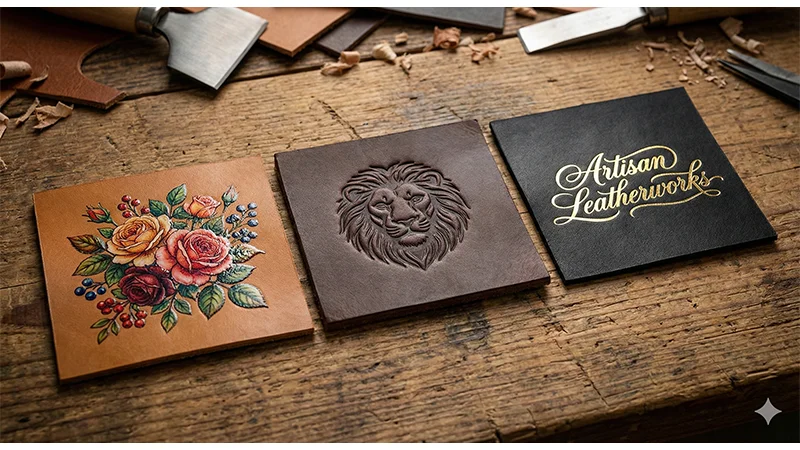
Leather Embossing Process
Leather embossing is a traditional surface decoration technique that uses metal dies to press patterns directly into the leather surface under external force or high temperature and pressure, creating clear, lasting raised and recessed textures. It is commonly used on leather goods, footwear, wallets, and brand logos.
Common Embossing Methods
- G-Clamp Embossing
Pre-fabricate a copper die. Place a hard backing board beneath the leather, position the die, and slowly apply pressure using a G-clamp. Within seconds, a deep, textured embossed pattern emerges. Ideal for small-batch, handcrafted customization.
- Copper Die Hammer Embossing
Attach a small copper die (e.g., name, logo) to a handle. Align it with the leather and strike vertically with a hammer to complete the embossing. This rapid method suits small patterns and single-item production.
- Core Characteristics
Requires pre-made specialized dies
Strong three-dimensional texture with consistent results
Fixed patterns, difficult to modify
Better suited for traditional, high-volume, or uniform-style production
uv stamps for leather
UV stamps are a premium decorative technique that combines UV stamp asme with traditional hot stamping. It preserves the metallic luster of hot stamping while significantly enhancing design flexibility and detail expression.
- Process Flow
Print colorful patterns onto leather surfaces using a stampa UV DTF machine (such as the UV6090).
Precise printing of UV ink stamp varnish onto designated areas.
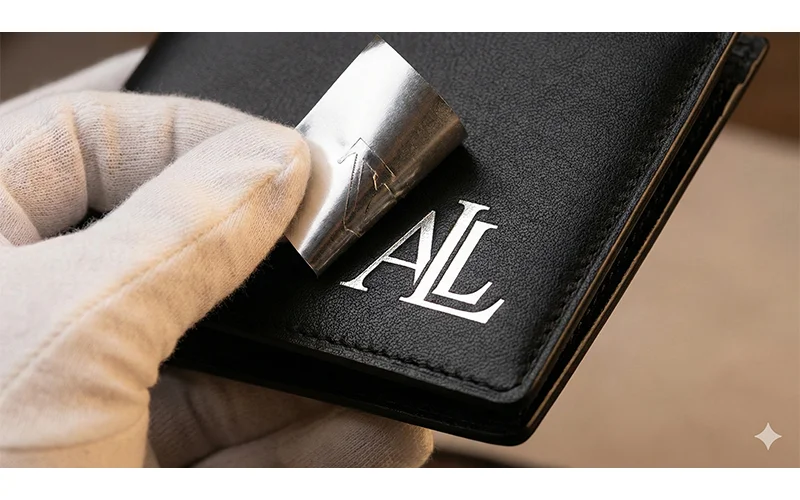
After printing, a UV lamp for stamps machine applies heat and pressure to transfer gold or silver foil onto the varnished areas.
Removing the backing film reveals a rich, luminous metallic effect.
- Process Effects & Advantages
- Rich, three-dimensional gold/silver foil stamping with brilliant metallic luster
- Scratch and abrasion resistant, ideal for high-use leather goods
- Supports high-precision micro-printing: 1 mm lines and 0. x mm fonts remain crisp and legible
- Enables localized foil stamping seamlessly integrated with color patterns
- Eliminates traditional foil stamping plates for flexible design modifications
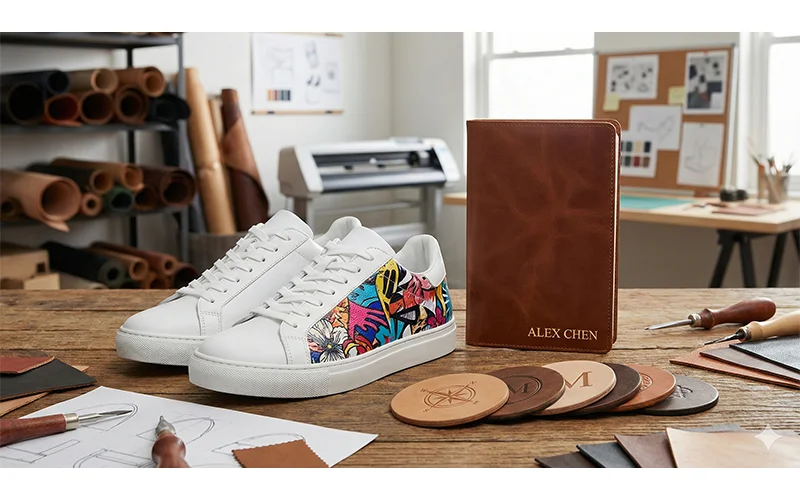
Visual Effects vs. Design Flexibility
| Comparison Dimension | UV Printing | Embossing | Hot Foil Stamping |
|---|---|---|---|
| Color Performance | Full color, high saturation | No color variation | Single color / metallic |
| Gradient Capability | Supported | Not supported | Not supported |
| Tactile / 3D Effect | Raised texture achievable with layered white ink | Strong embossed texture | Strong raised texture |
| Detailed Precision | Very high | Limited by embossing mold | Medium |
| Personalization Capability | Excellent for customization | Almost no customization | Limited customization |
Conclusion
UV leather printing offers distinct advantages for complex patterns, gradient colors, and personalized designs, while embossing is better suited for traditional, fixed-style products.
UV Printing vs Embossing Comparison Table
| Feature | UV Printing | Embossing |
|---|---|---|
| Cost | Low for small batch | High setup cost |
| Speed | Fast | Slow |
| Flexibility | High | Low |
| Color | Full color | Limited |
| Customization | Excellent | Limited |
Production Costs vs Efficiency
uv leather printing
Initial Investment: Equipment only, no mold costs
Per-Unit Cost: Low, ideal for small batches
Prototyping Speed: Instant printing
Perfect for custom orders and fast turnaround
Embossing & uv stamps
High upfront costs (dies / foil stamping machines)
High costs for small batches
Design modifications require new plates
More suitable for long-term, high-volume production
Application Scenario Comparison
UV leather printing Applications
Direct-to-Leather Printing for Shoe Uppers
Personalized Customization for Bags and Wallets
Custom Leather Labels and Logos
Premium Gifts and Cultural & Creative Products
Rapid Production of Small Batches and Multiple Styles
Embossing & Foil Stamping Applications
Luxury Brand Logos
Traditional Brand Identities
Mass-Produced Uniform-Style Products
UV Printing vs Embossing: Which One Should You Choose?
- Choose UV printing if you need:
Full-color designs
Small-batch customization
Fast turnaround
- Choose embossing or foil stamping if you need:
Consistent brand logos
High-volume production
Traditional texture
Environmental Friendliness and Material Adaptability
UV printer leather: Ink cures instantly upon application, resulting in low VOC emissions and greater environmental sustainability.
Embossing/Hot Stamping: Involves high temperatures, pressure, and consumables, leading to relatively higher energy consumption.
Additionally, leather uv printing machine offers superior adaptability to leather thickness and shape, making it particularly suitable for irregular and flexible leather goods.
Which process is better suited for the future market?
As the market shifts from mass production of identical items to small-batch customization, leather business UV DTF printers are becoming the preferred solution for an increasing number of leather processing plants, shoe factories, and custom workshops:
Greater design freedom
Faster delivery
Lower inventory pressure
Easier to create differentiated products
Conclusion
If you seek:
Rapid prototyping
Personalized customization
Full-color visual effects
Low minimum order quantities
UV printer news today offers a more competitive solution.
However, for:
Long-term, stable mass production
Consistent brand logos
Traditional craftsmanship aesthetics
Embossing and foil stamping retain their irreplaceable value.
FAQ – UV Printing vs Embossing Leather
Is UV printing better than embossing on leather?
UV printing is better for full-color designs, complex patterns, and small-batch customization. Embossing is more suitable for simple, consistent logos and large-scale production with traditional texture effects.
What is the cost difference between UV printing and embossing?
UV printing requires no molds, making it more cost-effective for small batches and custom orders. Embossing involves die-making and setup costs, which are only economical for high-volume production.
Can UV printing replace hot foil stamping on leather?
UV printing can replicate some visual effects using varnish and layering, but for metallic finishes like gold or silver, UV foil stamping is still required. However, UV-based processes offer greater flexibility and faster design changes.
Which method is best for small-batch leather customization?
UV printing is the best choice for small-batch or on-demand production. It allows instant printing, design flexibility, and no minimum order quantity, making it ideal for personalized leather goods.
Does UV printing last as long as embossing on leather?
With proper materials and settings, UV printing can be highly durable. Using flexible UV inks and correct curing conditions ensures good adhesion and resistance to cracking or peeling, though embossing may still have an advantage in long-term physical texture durability.
Which process is better for modern leather businesses?
For modern markets focused on customization, fast delivery, and flexible production, UV printing is becoming the preferred solution. Embossing remains valuable for traditional branding and mass production.