When producing custom socks, there are three main manufacturing methods widely used in the market:
- Jacquard socks
- Digital printed socks (360 sock printer machine)
- Heat transfer printed socks
Each method has its own advantages and limitations. Understanding these differences will help you choose the right production solution for your business.
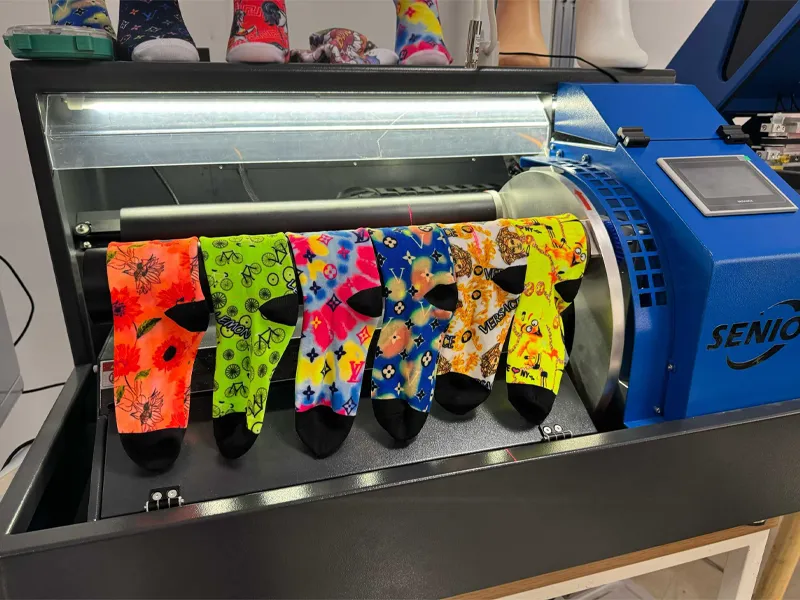
Jacquard Socks (Knitted Pattern Technology)
Jacquard socks are made by knitting colored yarns directly into the fabric structure. This creates bright and long-lasting patterns.
Advantages:
- Very durable patterns
- Colors stay vibrant after washing
- Premium look and feel
Disadvantages:
- Inside the sock, there are many floating threads (cut lines)
- These threads can cause discomfort when wearing them.
- Some manufacturers solve this by making double-layer socks, hiding the threads inside
However, double-layer socks significantly increase production cost.
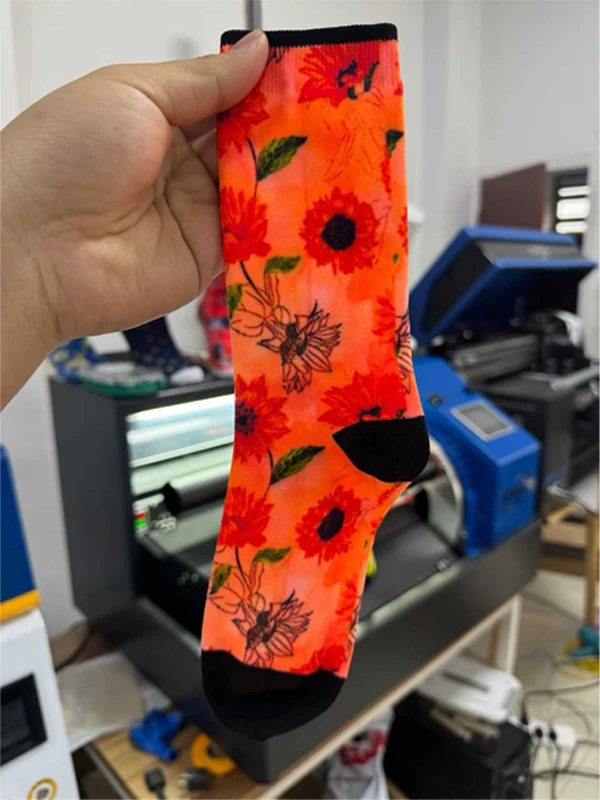
Digital Sock Printing (360° Sock Printer Machine)
Digital printing uses a 360 digital sock printer machine, where the sock is placed on a rotating roller. The printer sprays ink while rotating to create a full-wrap design.
You can check our machine here: Sock Printer Machine
Advantages:
- Seamless 360° full design
- No cut lines inside the sock
- Ideal for complex images and custom designs
Disadvantages:
- Colors are less vibrant compared to jacquard
- Printing requires white base socks only
- When stretched, white fibers may become visible
This is a common issue in digital textile printing.
Heat Transfer Socks (Transfer Printing)
Heat transfer printing works by transferring a design from a film onto the sock using heat and pressure.
Advantages:
- Easy to produce
- Suitable for small designs or logos
Disadvantages:
- Limited printable area
- Poor elasticity (design cracks when stretched)
- Risk of peeling or fading after washing
Which Sock Printing Method Is Best?
There is no perfect printing method. Each technology serves different needs:
| Method | Best For | Limitation |
|---|---|---|
| Jacquard | Premium woven socks | Threads inside |
| Digital Printing | Full design customization | Color & white base |
| Heat Transfer | Small logos | Durability & stretch |
The best choice depends on your business:
- Want premium socks → Jacquard
- Want full custom designs → Digital sock printer
- Want low-cost logo printing → Heat transfer
Why Choose a Digital Sock Printer Machine?
If your goal is customization, flexibility, and small-batch production, a digital sock printer machine is the best option.
- No plate making
- Fast design switching
- Suitable for small businesses and startups
- Supports complex and personalized designs
Conclusion
Each sock printing method has its own strengths and weaknesses. There is no perfect solution — only the most suitable one for your needs.
If you are planning to start or upgrade your sock printing business, choosing the right technology is the key to success.
Contact us for professional advice and customized solutions.
What is the best sock printing method?
It depends on your needs. Digital printing is best for customization.
Can sock printers print full designs?
Yes, 360 digital sock printers can print full-wrap designs.
Do printed socks fade after washing?
High-quality digital printing offers good durability, but heat transfer may fade.