
In applications such as glass, acrylic, window decals, and UV ultra-transparent labels,
Many customers ask:
What exactly is the difference between single-color, color-white, and color-white-color?
Which yields the best effect? Which is more suitable for me?
In essence, these three methods differ in the structure of their UV ink layers.
Below, we shall illustrate the distinctions between single-color UV direct printing, color-on-white, and color-on-white-color in the most straightforward and comprehensible manner.
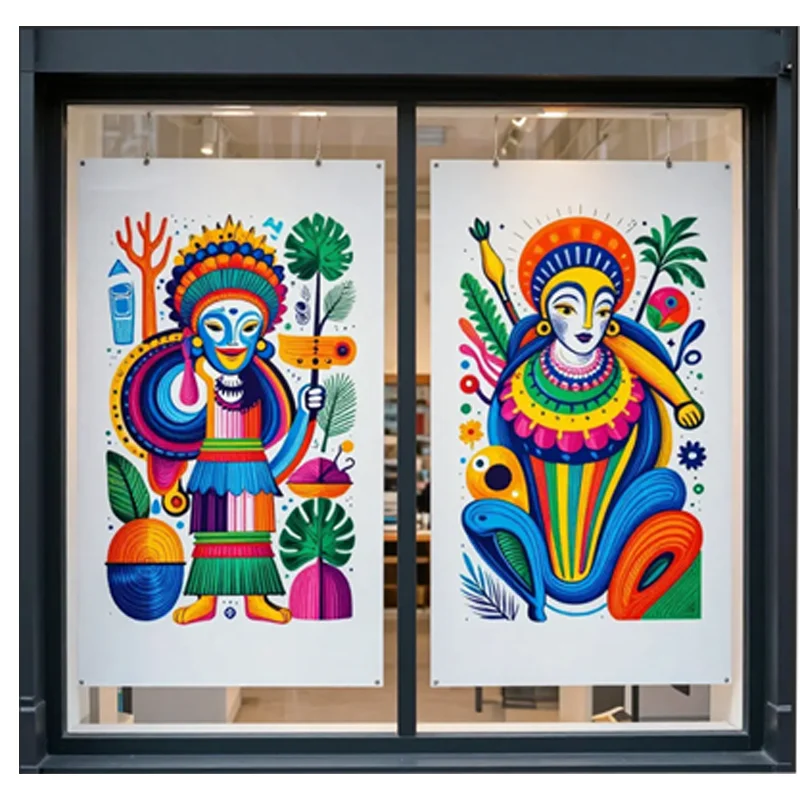
What Is DTF Prints UV? Understanding Ultra-Transparent UV Printing
UV ultra-transparent printing is typically applied to:
Glass
Acrylic
Transparent PET
Shop window displays
By layering UV inks in different ways, patterns can be rendered on transparent substrates to achieve varied visual effects.
Why does a UV printer differentiate between single-color, color-white, and color-white-color?
Because transparent materials inherently lack the ability to obscure backgrounds,
Whether white ink is applied—and how many layers—directly determines:
the vibrancy of colours
the level of saturation
whether double-sided viewing is supported
the final quality and visual impact.
Detailed Explanation of UV Single-Colour Printing
Principles of Single-Colour Printing
Single-color printing refers to applying only one layer of colored ink onto the material surface without adding white ink.
Characteristics and Applications of Single-Colour dtf prints uv
Process simplicity
Rapid printing speed
Relatively low cost
Disadvantages
When applied to glass, colours appear faded
Lower saturation
Viewed from the opposite side of the glass, patterns appear as colourful reflections
Overall aesthetic appeal is relatively diminished
Suitable Applications
Temporary displays
Situations where colour accuracy is not paramount
Cost-sensitive projects
Detailed Explanation of printer dtf uv Colour-White Printing Method
Principle of Colour-White Process
“Color-white” refers to the printing process where:
A layer of colored ink is printed first, followed by a layer of white ink.
Characteristics of Colour-White Printing
Viewed from the front: displays a colour pattern
Viewed from the reverse: shows a white layer
White ink serves to block background colours and enhance saturation
Aesthetically superior to single-colour printing
Disadvantages
Visible only from one side
Unsuitable for applications requiring double-sided visibility
Suitable Applications
Single-sided display windows
Locations positioned against walls or where the reverse side is obscured
Situations demanding colour accuracy but not requiring double-sided effects
Detailed Explanation of sticker printing uv’s Colour-White-Colour Printing Method
The Technical Principle of Colour-White-Colour Printing
Color-White-Color printing is currently one of the most effective methods:
First print a layer of color, then a layer of white in between, and finally print another layer of color.
Characteristics of Colour-White-Colour Printing
Front view: colourful
Back view: colourful
High colour saturation
Exceptional image precision
Consistent visual effect on both sides
Highest overall quality
Visual impact:
Stunning imagery on both front and back
Ideal for premium displays and brand applications
Suitable Applications
Shop window displays
Glass partitions
Luxury brand showcases
Projects demanding exceptional visual quality
Single-colour / Colour-white / Colour-white-colour Comparison of the three methods
| Item | Single-Colour | Colour + White | Colour + White + Colour |
|---|---|---|---|
| Ink Structure | Colour | Colour + White | Colour + White + Colour |
| Colour Saturation | Low | Medium | High |
| White Ink Applied | No | Yes | Yes |
| Double-Sided Visibility | No | No | Yes |
| Visual Appearance | ★★☆☆☆ | ★★★☆☆ | ★★★★★ |
| Cost | Low | Medium | Higher |
How to Select uv direct printing Methods for Different Applications?
Budget constraints / Temporary displays → Opt for single-colour printing
Single-sided displays / Enhanced saturation → Opt for colour-white printing
Double-sided visibility / Premium displays → Opt for colour-white-colour printing