A UV 3D label sticker printer is used to produce raised, glossy, and highly customized labels for branding, packaging, apparel decoration, and promotional products. Compared with ordinary flat stickers, UV 3D labels offer a stronger visual impact and a tactile embossed effect that helps products look more premium.
Today, many businesses use UV DTF printing technology to create 3D label stickers without molds, screen plates, or complicated manual layering. A professional UV 3D label sticker printer can print white ink, color ink, and varnish layer by layer, making it possible to achieve clear texture, strong adhesion, and flexible small-batch production.
3D Transfer Sticker Printer for Raised Logos and Heat Transfer Labels
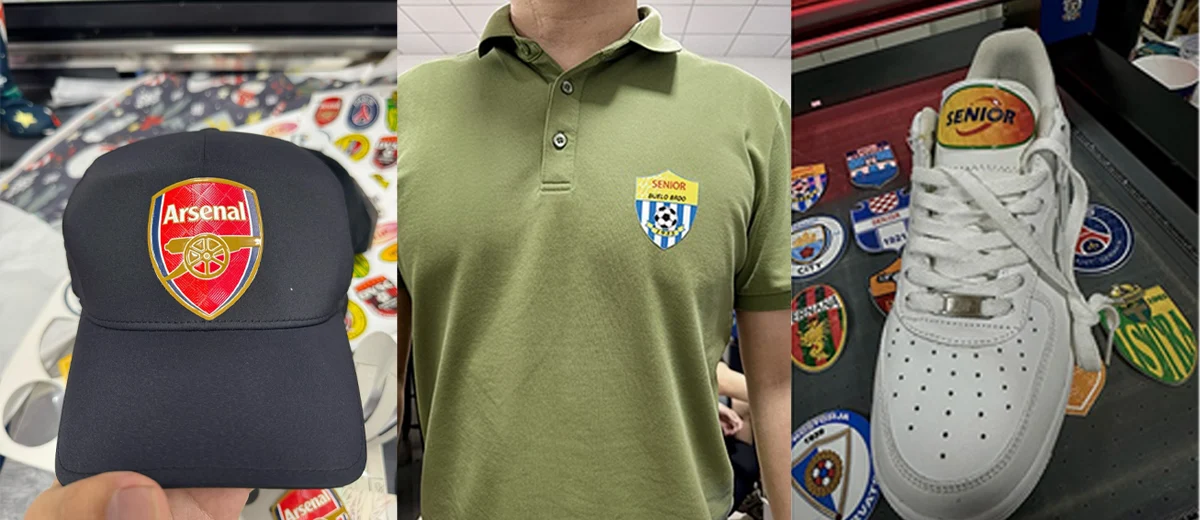
A 3D transfer sticker printer is used to produce raised logo stickers, heat transfer labels, and UV DTF 3D labels for apparel, hats, shoes, bags, and packaging. The printer builds the design with white ink, color ink, and varnish layers, then transfers the finished sticker onto the product surface.
For brands that need small-batch custom logos, 3D raised labels, or imitation silicone label effects, this printing method provides a flexible way to create premium tactile branding without molds or screen plates.
What Is a UV 3D Label Sticker Printer?
A UV 3D label sticker printer is used to make raised and textured labels with a 3D effect. It prints layer by layer with UV ink and cures the ink instantly, creating glossy, durable, and custom stickers for branding, packaging, and decoration.
What Is the Difference Between a UV 3D Label Sticker Printer and a Normal Sticker Printer?
A UV 3D label sticker printer is very different from a normal sticker printer. A normal sticker printer is mainly used for flat labels, while a UV 3D label sticker printer can create raised, textured, and embossed stickers with a clear 3D effect. It uses UV ink and instant UV curing, so the printed design dries immediately and can build up layers for a stronger visual and tactile result. It is better for premium branding, custom decoration, and 3D label applications, while ordinary sticker printers are more suitable for simple flat labels such as barcode labels, price labels, and shipping stickers.
| Comparison Point | UV 3D Label Sticker Printer | Normal Sticker Printer |
|---|---|---|
| Printing Effect | Raised, textured, 3D embossed effect | Flat printed labels only |
| Printing Technology | UV ink with instant UV curing | Inkjet or thermal printing |
| Surface Feel | Clear tactile texture | Smooth and flat |
| Material Range | Wider application range | Mainly label paper and sticker media |
| Main Applications | 3D labels, crystal labels, embossed logo stickers | Barcode labels, price labels, shipping labels |
| Workflow | May include printing, cutting, and transfer | Simple direct printing |
| Best For | Premium custom labels and decorative branding | Fast and standard flat label printing |
UV 3D Label Sticker Printer vs UV DTF Printer
| Item | UV 3D Label Sticker Printer | UV DTF Printer |
|---|---|---|
| Printing way | Direct printing on the material surface | Print on film first, then transfer |
| Application | Good for flat or regular items | Good for curved or irregular items |
| 3D effect | Made by direct ink buildup | Made by layered printing and transfer |
| Process | Simpler direct printing | Needs an extra transfer step |
| Feature | Direct 3D printing | Flexible transfer printing |
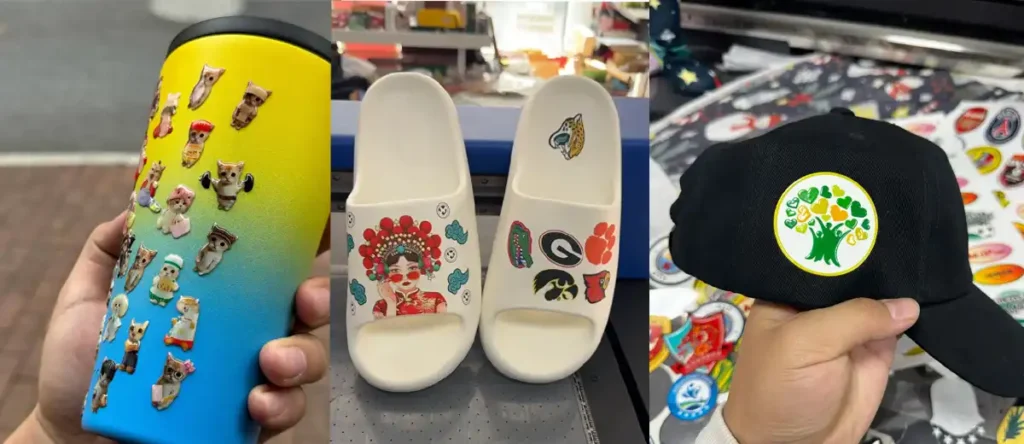
3D label stickers, sometimes known as imitation silicone 3D labels, are decorative branding elements that feature noticeable embossed layers and a soft-touch effect. Unlike flat vinyl logos or printed patches, these labels offer:
- A raised 3D surface that can be felt by touch
- Clear depth and strong visual dimensions
- High elasticity and flexibility
- A premium, distinctive appearance that draws attention
These qualities make them ideal for brands that want to communicate quality, personality, and uniqueness. The label becomes not just a decoration but an identity symbol.
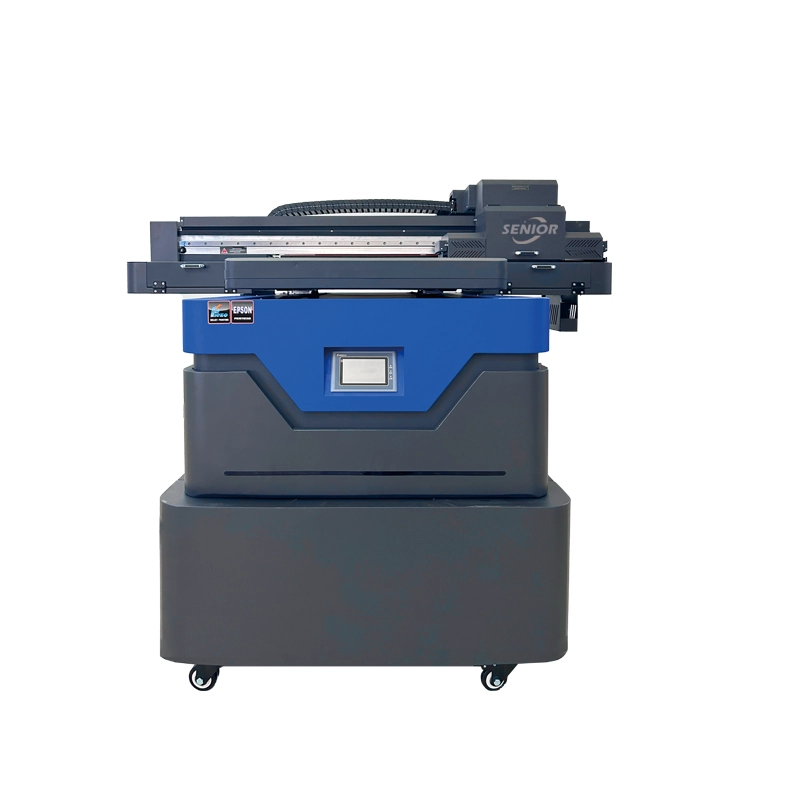
SE6090 UV Flatbed Printer with TX800/ i1600/i3200
Common Applications of 3D Label Stickers
3D labels are widely used across fashion, sportswear, and lifestyle goods. Popular applications include:
| Product Category | Application Use | Purpose |
|---|---|---|
| Sportswear Brands | Chest logos, arm patches | High-impact visual identity |
| Casual Fashion | Custom branding stickers on jackets and hoodies | Premium and trendy appearance |
| Footwear | Tongue labels, heel branding | Durable & flexible branding |
| Bags & Backpacks | External brand marks | Outdoor-grade durability |
| Hats & Accessories | 3D crest logos | Strong tactile consumer impression |
These brand stickers’ custom solutions allow companies to differentiate their products without large production runs, making them ideal for small-batch and personalized branding.
How to Make 3D Label Stickers Step by Step
Understanding UV DTF Printing Technology
The core behind the 3D embossed effect is UV DTF printing, where ink layers are built up to create a solid, raised texture.
Producing high-quality 3D label stickers with UV DTF printing involves a layered process that builds up texture and depth through multiple ink applications and UV curing.
- Step 1: Design Preparation
Prepare the artwork in design software, ensuring proper separation of layers for white ink, color, and varnish to achieve the desired 3D effect.
- Step 2: White Ink Base Layer
Print a white ink base layer to establish the foundation of the design and provide opacity for subsequent color layers.
- Step 3: CMYK Color Printing
Apply CMYK color ink over the white base to create vibrant, high-resolution images with accurate color reproduction.
- Step 4: Varnish Coating
Add a gloss varnish layer to enhance surface shine and define the raised texture areas.
- Step 5: UV Curing
Each layer is instantly cured using UV light, ensuring strong adhesion, durability, and structural stability.
- Step 6: Transfer Process
After printing, transfer the design from the film onto the final surface, ensuring firm pressure for proper adhesion.
3D Raised Logo Printing Process
From digital artwork design to UV printing, cutting, heat pressing, and final application, each step is designed to create a clear, glossy, and durable 3D raised logo for apparel branding.
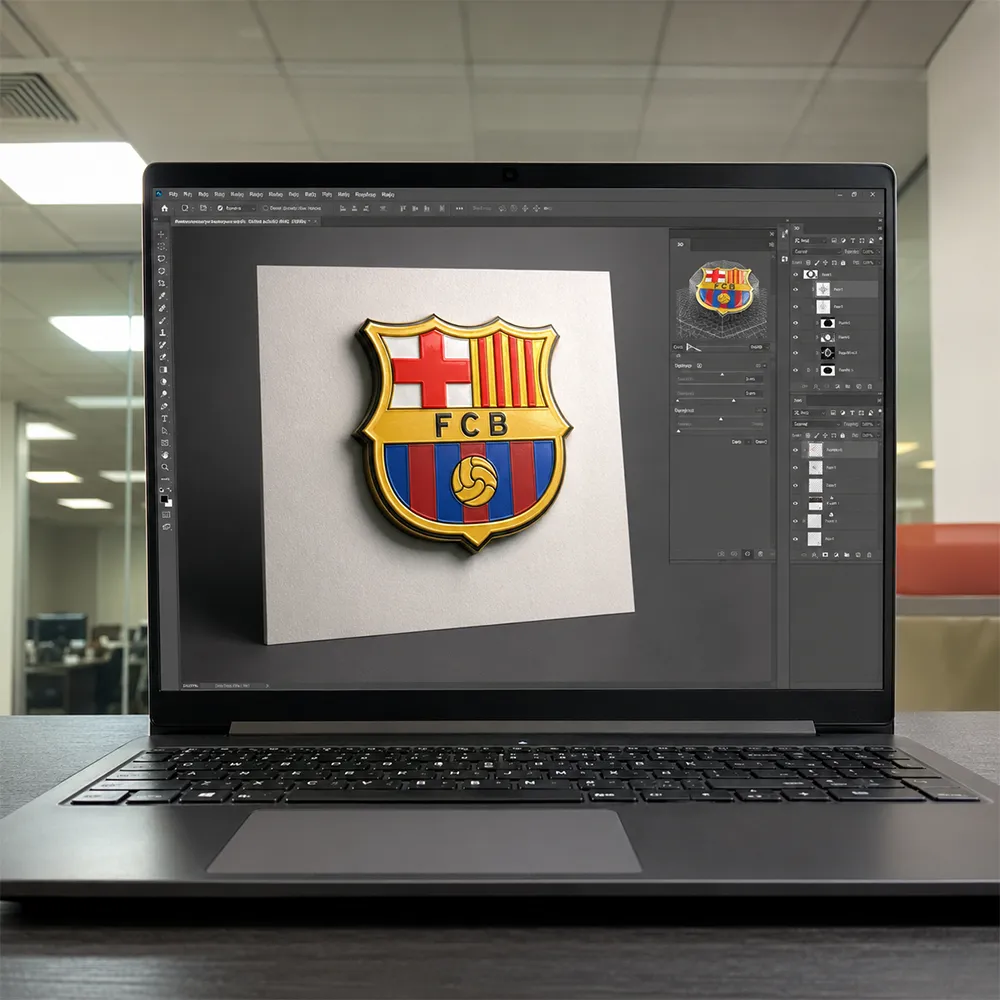
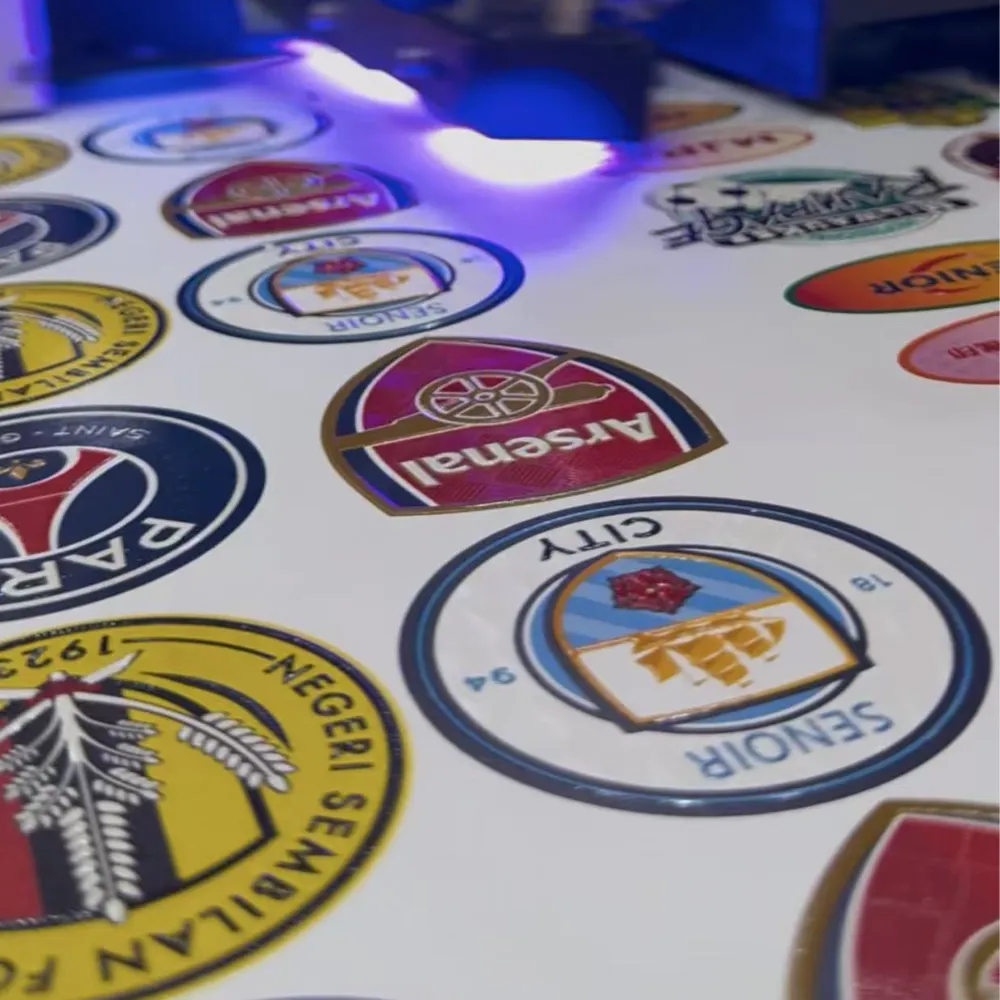
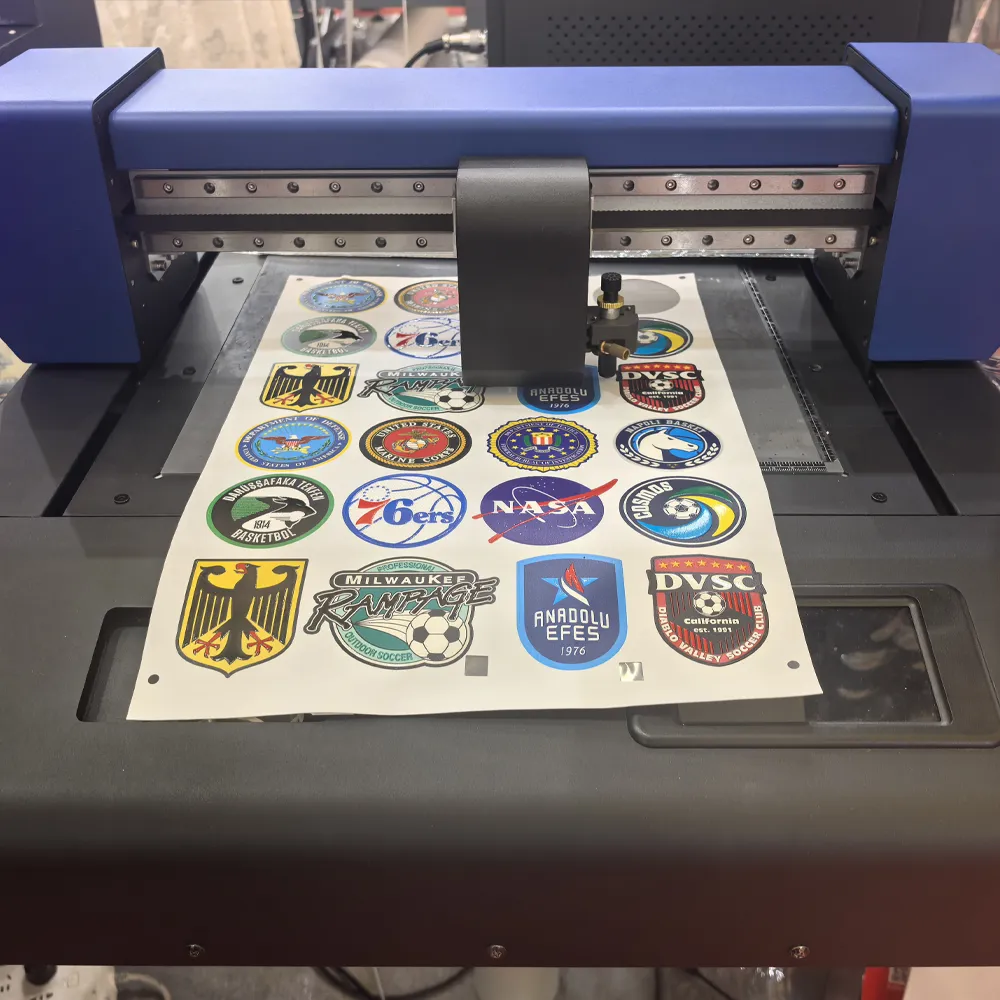
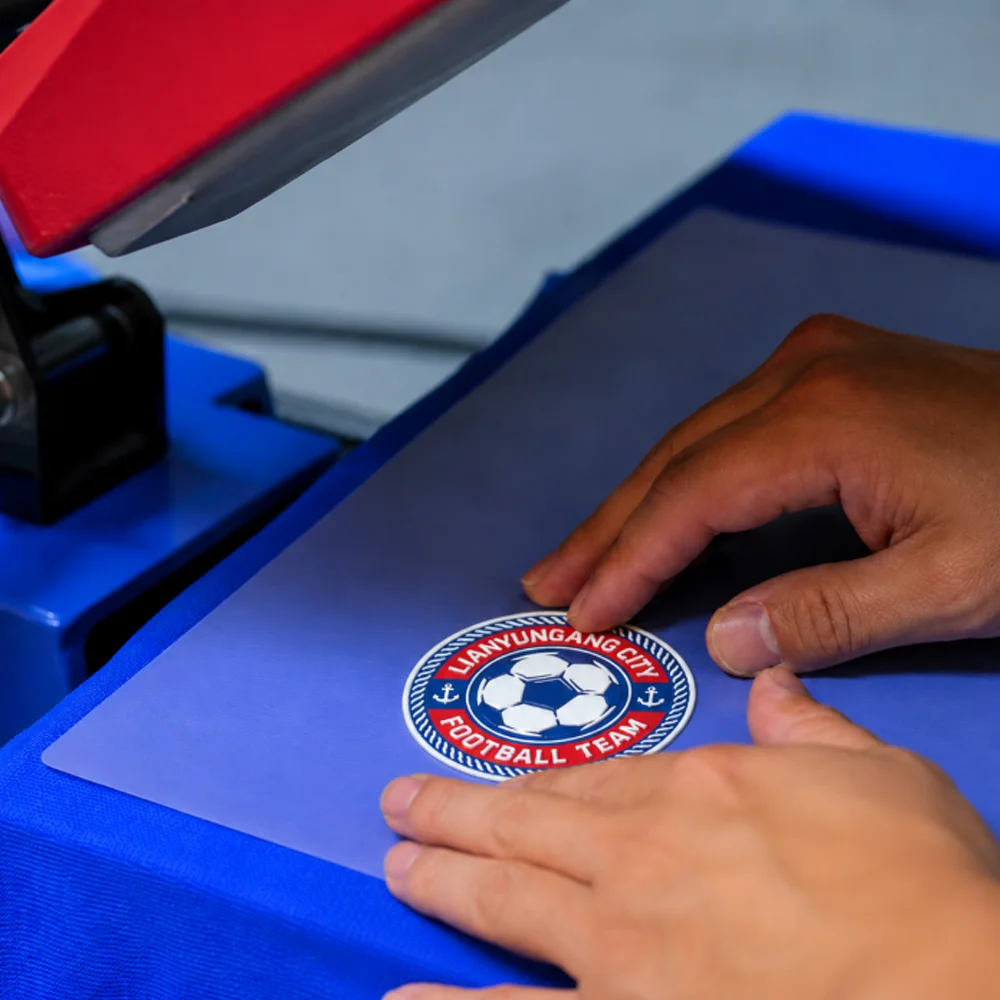
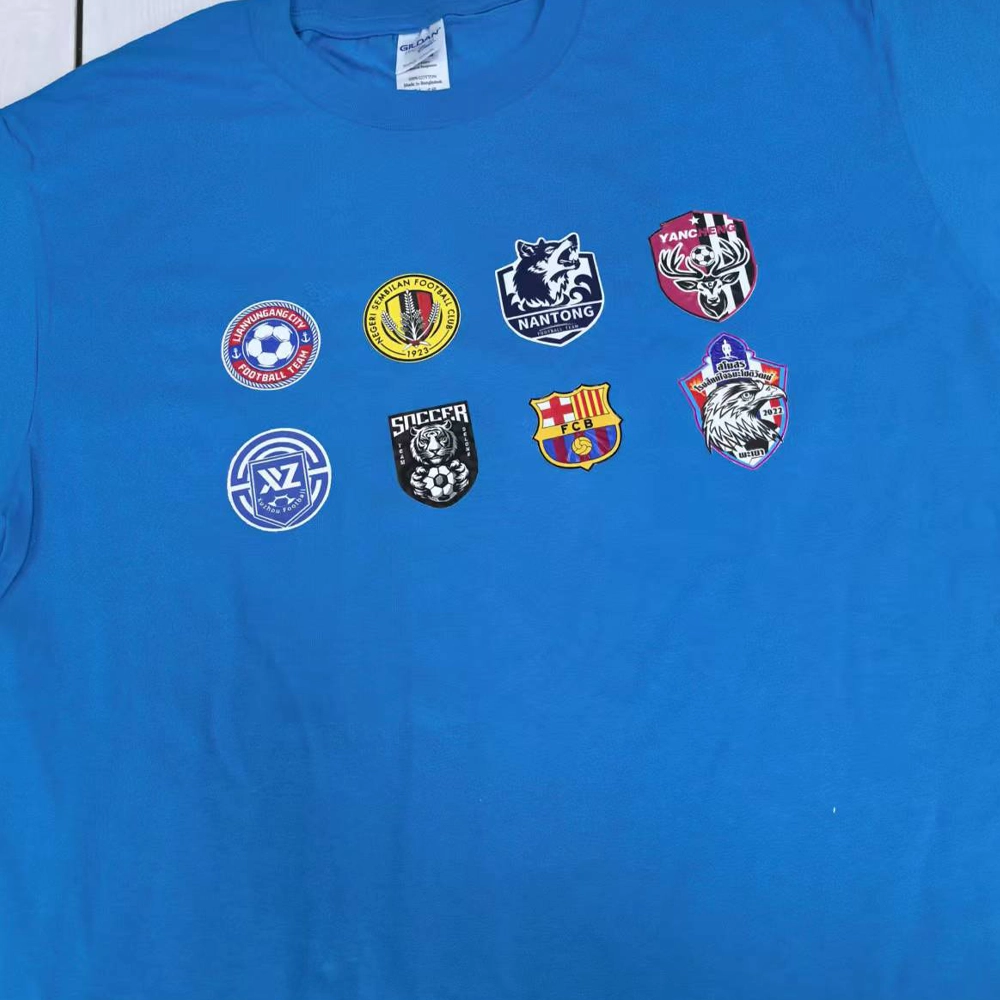
Design Artwork → UV Printing → Precision Cutting → Heat Press Transfer → Finished 3D Logo
Enhanced 3D Elevated Effect
For standard 3D label printing, the process typically follows this structure:
- White Ink Base Layer
- CMYK Color Layer
- Gloss Varnish Coating
- UV Light Curing
To achieve a stronger and more noticeable embossed effect, the layering method can be adjusted:
Multiple White Ink Layers → CMYK → Gloss → UV Curing
By increasing the number of white ink layers, the label gains physical height and a more pronounced tactile effect, similar to molded silicone labels—while maintaining flexibility and eliminating the need for molds.
How to Print 3D Raised Labels with a 6090 UV Printer
A 6090 UV printer can produce 3D raised labels by printing multiple layers of white ink, CMYK color ink, and varnish. For apparel logos, cap logos, shoe tongue labels, bag labels, and dome-style labels, the raised effect is usually created by stacking varnish layers to build texture and gloss.
For most clothing label applications, we recommend a normal raised thickness of around 0.3mm to 0.4mm for better flexibility and transfer performance. For stronger visual impact, our 6090 UV printer can also produce raised effects up to 1mm depending on the label design and application requirements.
Learn more about our 6090 UV printer for 3D transfer stickers and UV DTF printing.
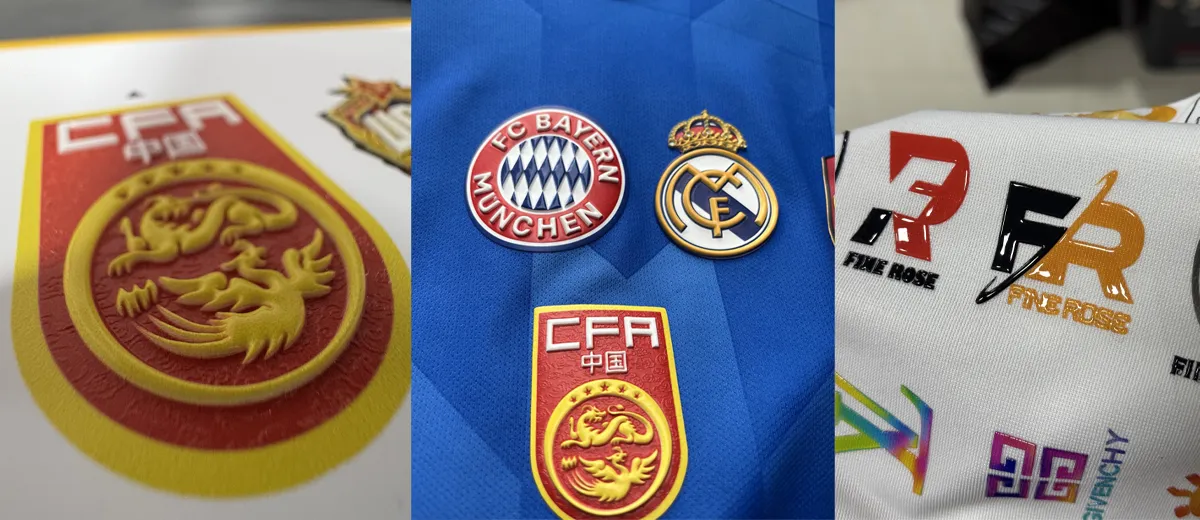
Key Advantages of UV DTF for 3D Labels:
- No plate-making or mold needed
- High production efficiency
- Unlimited color combinations and gradients
- Strong adhesion and durability
- Clear texture and crisp detail reproduction
- Wash-resistant, scratch-resistant, UV-resistant
This makes UV DTF perfect for both industrial production and small-scale custom runs.
Traditional Screen Printing
- Technology Principle: Ink passes through mesh screens and is applied with physical squeegee pressure.
- Upfront Cost: Requires screen plate making, resulting in higher initial costs.
- Minimum Order: Usually requires a minimum order quantity.
- Color Effect: Limited number of colors and difficult to achieve gradients.
- Production Process: Often needs high-temperature curing.
- Operation Difficulty: Requires professional equipment and skilled operators.
Heat Transfer Labels (Innovative Process)
- Technology Principle: Uses UV digital printing with cold-transfer application.
- Upfront Cost: No screen plates needed; zero-cost to start.
- Minimum Order: Supports single-piece orders with flexible printing.
- Color Effect: Unlimited colors, realistic images, and 3D raised effects.
- Production Process: Cold application at room temperature, more friendly to various fabrics.
- Operation Difficulty: Easy to use—peel, apply, and smooth out.
UV DTF printing is better for custom, small-batch production, while screen printing is more suitable for large-scale, standardized manufacturing.
Why Choose Senior UV DTF Printer for 3D Label Production
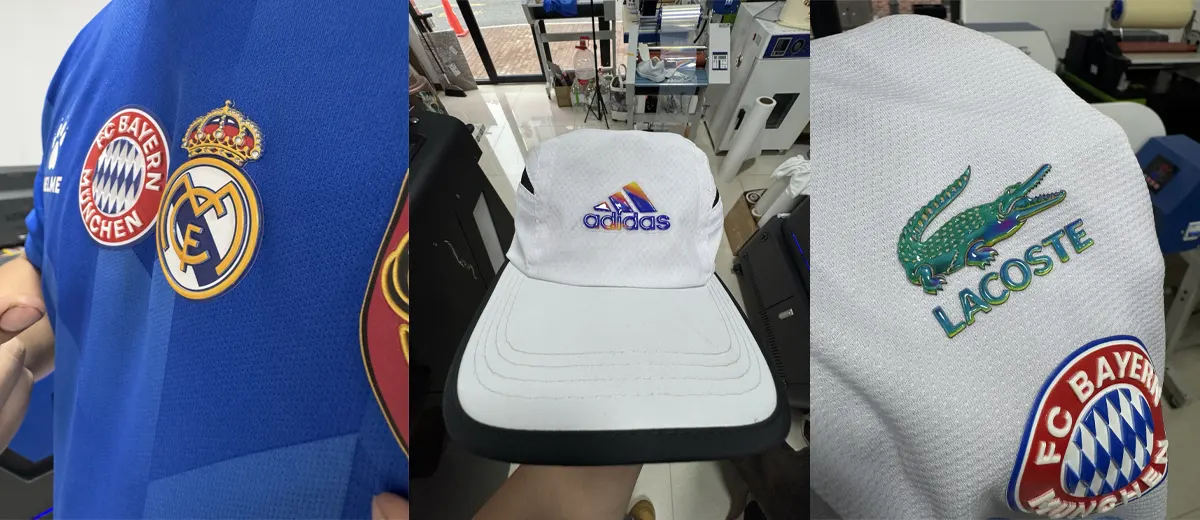
The Senior UV DTF Printer is specifically engineered for producing high-quality imitation silicone 3D labels. Its advantages include:
- Exceptional Color & Detail Clarity
Fine lines, gradients, and micro-textures appear sharp and vivid. - Strong 3D Embossed Raised Effect
Multi-layer white ink stacking achieves real depth, not just optical illusion. - Superior Durability
Labels withstand:
- Multiple washes
- Abrasion and scratching
- UV sunlight exposure
They maintain color vibrancy and surface integrity over time.
- Supports Small & Large Production Runs
Perfect for:
- Prototype development
- Personalized brand collections
- Limited-edition releases
- Medium-scale manufacturing
This flexibility is crucial for brands adapting to fast-changing market trends.
This workflow ensures consistent, professional 3D label sticker output suitable for commercial sale.
Advantages of Using a UV 3D Label Sticker Printer
No molds or plate-making needed, which makes production faster and more flexible. Better 3D effect, with a raised surface and stronger visual appeal. More color freedom, including gradients, fine details, and custom designs. Good for small orders, because there is no high setup cost. Strong durability, with good resistance to scratching, washing, and UV exposure.
In short, UV DTF 3D label stickers give brands more flexibility, better texture, and easier customization.
In short—modern brand customization demands flexibility, and UV DTF provides it.
Best Practice Tips for Optimal Results
- Maintain consistent print head height relative to TPU / PVC substrates
- Ensure all materials are dust-free and flat before printing
- For stronger tactile height, increase white ink stacking phases
- Store finished labels in sealed packaging to prevent contamination
- Press labels evenly during transfer to ensure strong bonding
Proper workflow control ensures your 3D labels always achieve premium quality.
Conclusion
The Senior UV DTF Printer is a powerful and versatile solution for producing 3D label stickers, offering exceptional design flexibility, outstanding durability, and premium tactile branding performance. It not only supports the creation of custom branding stickers, but also opens opportunities for fashion innovation, private brand expansion, and specialty product decoration.
By adopting this technology, businesses gain:
- Higher product value
- Stronger brand identity impact
- More creative and market-differentiated offerings
The future of branding is tactile, visual, and customizable—and 3D label stickers are at the center of that evolution.
🤖 Ask ChatGPT about this article
FAQ
What are 3D label stickers?
3D label stickers are raised labels with an embossed look and tactile texture. They are used for premium branding, packaging, apparel, and decorative applications.
How are 3D label stickers made?
They are made by printing white ink, color ink, and varnish in layers, curing each layer with UV light, and then transferring the design onto the final surface.
What is the best UV 3D label sticker printer?
The best printer should provide stable white ink output, sharp detail, strong varnish layering, and reliable UV curing for clear 3D raised effects.
Are UV DTF 3D labels durable?
Yes. UV DTF 3D labels are scratch-resistant, wash-resistant, and UV-resistant, making them suitable for long-lasting branding use.
Can 3D label stickers be customized in small batches?
Yes. UV DTF printing supports small-batch and even single-piece customization because it does not require molds or plate-making.