

Why Sock Material Matters in Custom Sock Printing
Why Sock Material Matters in Custom Sock Printing
Cotton vs. polyester sock printing is important because different sock materials need different printing methods and can create different final results. When planning custom printed socks, buyers should first understand the sock material before choosing the printing process, ink type, and sock printing machine.
Custom printed socks are valuable for personal expression, gifts, and business marketing. For individuals, they can work like a “name card on the feet,” showing unique patterns, text, colors, and personal style. For social occasions, custom socks can be used as memorable gifts for birthdays, graduations, weddings, events, and team activities.
For businesses, custom printed socks are also a low-cost marketing tool. Brands can print logos, slogans, or theme patterns on socks for employees, customers, events, and promotional campaigns. For small brands, choosing the right sock material and printing method can also help create more unique products and avoid looking the same as competitors.
This cotton vs. polyester sock printing guide helps buyers choose the right sock material, ink process, and sock printing machine for custom sock production.
Polyester Sock Printing with Heat-Transfer Ink
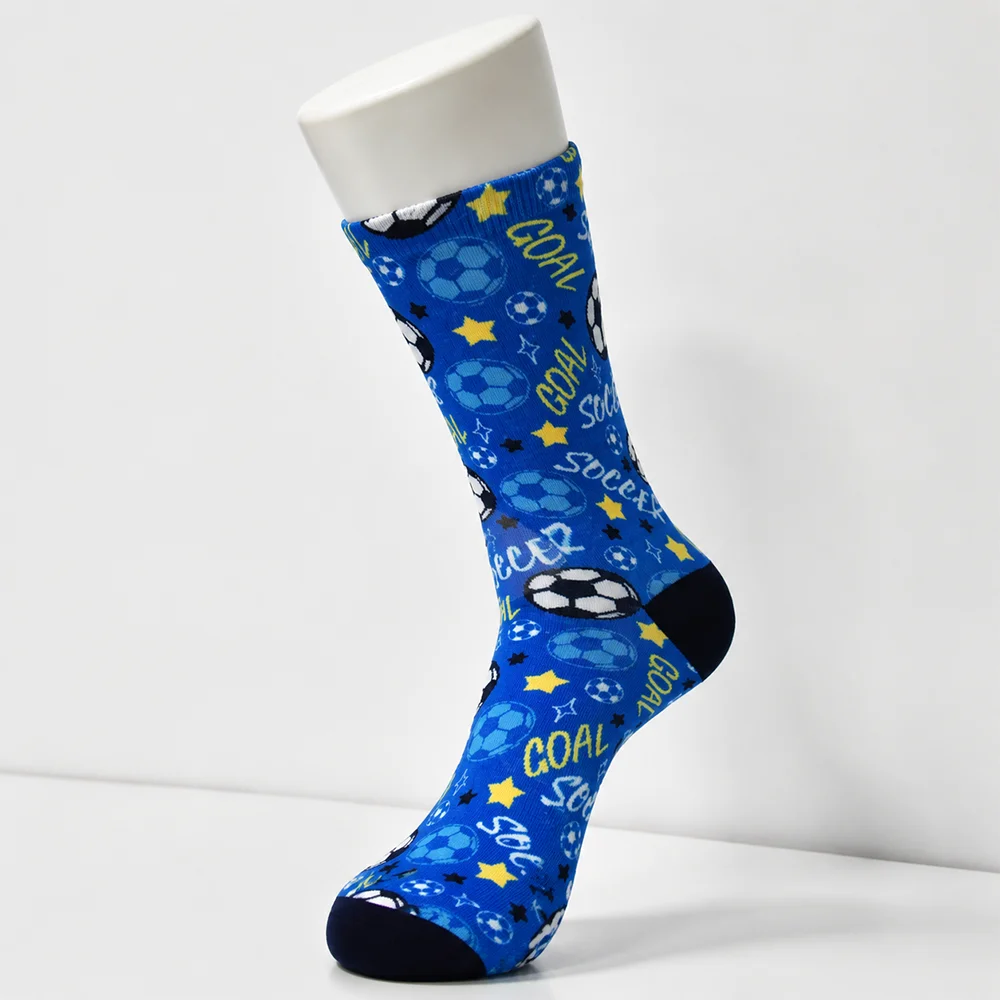
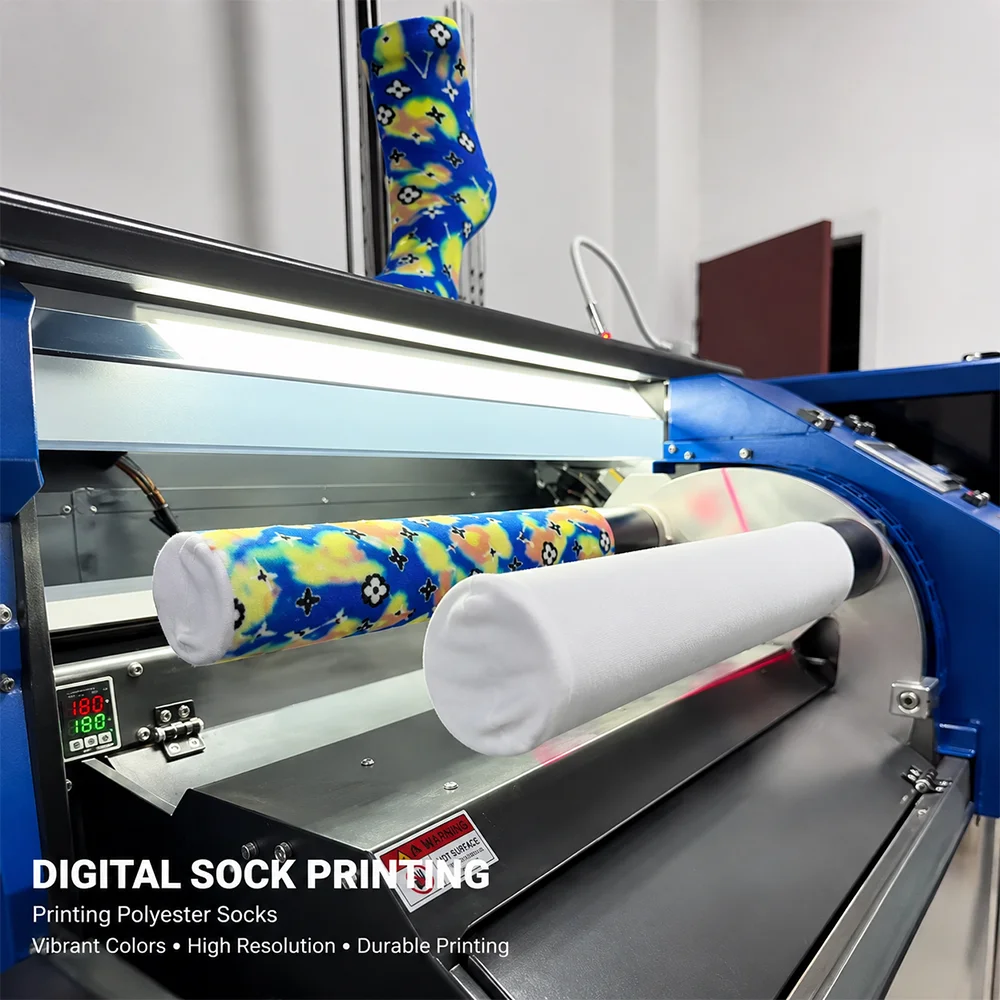
For polyester sock printing, our digital direct-to-sock printer uses heat-transfer ink to print colorful patterns directly onto the sock surface. This method is suitable for custom polyester socks, sports socks, fashion socks, promotional socks, and small-batch personalized orders.
The production speed for polyester socks is about one sock per minute, depending on the design size, print coverage, and production settings. It helps businesses produce samples and custom sock orders more flexibly without high MOQ.
For different sock materials, the ink choice should also be different. Polyester socks use heat-transfer ink, while cotton socks use pigment ink for better fabric compatibility and printing performance.
Cotton Sock Printing with Pigment Ink
For polyester sock printing, our digital direct-to-sock printer uses heat-transfer ink to print colorful patterns directly onto the sock surface. This method is suitable for custom polyester socks, sports socks, fashion socks, promotional socks, and small-batch personalized orders.
The production speed for polyester socks is about one sock per minute, depending on the design size, print coverage, and production settings. It helps businesses produce samples and custom sock orders more flexibly without a high MOQ.
For different sock materials, the ink choice should also be different. Polyester socks use heat-transfer ink, while cotton socks use pigment ink for better fabric compatibility and printing performance.
Digital Sock Printing for Cotton and Polyester Socks
For businesses comparing cotton vs. polyester sock printing, digital sock printing gives more flexibility for different materials and custom order types.
Digital sock printing can be used for both cotton socks and polyester socks, but the ink choice and production process should match the sock material. For polyester socks, heat-transfer ink is usually used to create bright colors, smooth gradients, and strong color performance. For cotton socks, pigment ink is a better choice because it works better with cotton fabric.
Our digital direct-to-sock printer is equipped with four sock sleeves and one Epson 1600 printhead, making it suitable for flexible custom sock production. The fastest printing speed can reach about 30 seconds per sock under standard print settings. In normal production, polyester socks are usually printed at about one sock per minute, while cotton socks may take about one sock every two minutes depending on the fabric, design coverage, and curing process.
For businesses that need custom socks in different materials, digital sock printing offers more flexibility than traditional methods. It can support small-batch orders, sample testing, sports socks, fashion socks, brand logo socks, and personalized sock designs.
Sublimation Sock Printing: Best for Polyester Socks
Sublimation sock printing is best suited for polyester socks because heat-transfer ink works well with polyester fibers. It can create bright colors, smooth gradients, and clear custom patterns, making it suitable for sports socks, fashion socks, promotional socks, and personalized sock designs.
However, sublimation sock printing is not the best choice for cotton socks. Cotton socks usually need pigment ink for better fabric compatibility. In some sublimation sock applications, white gaps or seam lines may appear when the sock is stretched, especially on heavily printed areas.
For businesses printing both polyester and cotton socks, material choice is very important. Polyester socks can use heat-transfer ink, while cotton socks should use pigment ink. A digital sock printer gives businesses more flexibility to choose the right printing process based on the sock material and order requirements.
Can You Sublimate Cotton Socks?
Cotton socks are not the best choice for sublimation sock printing. Sublimation printing works by heating the ink into gas and bonding it with polyester fibers. Because cotton fibers have different physical and chemical properties, standard sublimation ink cannot bond well with cotton socks.
This is why polyester socks are usually better for sublimation or heat-transfer ink printing. The colors can be bright, durable, and smooth on polyester fibers. For cotton socks, pigment ink is usually a better choice because it is more suitable for cotton fabric and can create a more stable printing result.
In simple terms, polyester socks are better for sublimation-style printing, while cotton socks need a different ink and printing process. When choosing a sock printing machine, buyers should first confirm the sock material, then choose the correct ink and printing method.
How to Choose a Sock Printing Machine for Cotton vs Polyester Sock Printing
When comparing cotton vs polyester sock printing, buyers should first consider the sock material, order quantity, required printing effect, and machine setup. Polyester socks and cotton socks need different printing processes, so the sock printing machine should support flexible ink options and stable production for different materials.
For custom sock printing, a digital direct-to-sock printer is suitable for small-batch orders, fast sample testing, and frequent design updates. It can help businesses print cotton and polyester socks more efficiently while keeping good color performance and detailed patterns.
For businesses that need to print both cotton and polyester socks, our sock printer machine can support flexible digital sock printing with different ink options for different materials.
Understanding cotton vs polyester sock printing can help buyers choose the right machine setup before starting production.
FAQ About Cotton vs Polyester Sock Printing
What is the difference between cotton vs polyester sock printing?
Cotton vs polyester sock printing creates different color and fabric effects. Polyester socks usually show brighter colors, smoother gradients, and better color stability. Cotton socks feel softer and more natural, but the printed colors may be slightly less vivid.
Which printing method is better for polyester sock printing?
Polyester sock printing is usually better with heat-transfer ink or sublimation-style printing. Polyester socks sublimation printing can create bright colors, clear patterns, and smooth gradients for sports socks, fashion socks, and custom designs.
Is cotton sock printing suitable for sublimation?
Cotton sock printing is not ideal for standard sublimation sock printing. Sublimation ink works better with polyester fibers. For cotton sock pigment ink printing, the ink is more suitable for cotton fabric and can create a better printing result.
Can one sock printing machine print both cotton and polyester socks?
Yes. A digital sock printing machine can print both cotton socks and polyester socks, but the ink choice should match the material. Polyester socks use heat-transfer ink, while cotton socks usually use pigment ink.
How fast can a sock printing machine print cotton and polyester socks?
The fastest printing speed can reach about 30 seconds per sock under standard settings. In normal production, polyester socks are usually about one sock per minute, while cotton socks may take about one sock every two minutes.