For many custom sign manufacturers, corrosion-resistant sign printing traditionally requires multiple steps, including plate making, screen printing, film exposure, and chemical processing.
Today, the corrosion-resistant sign printing process can be simplified by combining a 6090 UV printer with corrosion-resistant blue ink and an etching machine.
This solution allows small printing shops and custom product manufacturers to produce customized aluminum signs with high precision, short lead times, and flexible production capabilities.
As a UV printer manufacturer, we recommend this configuration for businesses that need to produce custom etched aluminum nameplates, industrial labels, equipment plates, and durable metal signs.
What Equipment Is Required for Corrosion-Resistant Sign Printing?
A complete production line requires two main machines:
1. 6090 UV Printer
Recommended configuration:
- Printing size: 600 × 900 mm
- Printhead: 1 × Epson i1600
- Ink system: Special corrosion-resistant blue ink
The UV printer is responsible for printing the protective corrosion-resistant ink layer onto the aluminum plate.
The printed blue ink works as a protective mask during the etching process.
2. Etching Machine
After UV printing, the aluminum plate is transferred to the etching machine.
The etching process uses chemicals such as the following:
- Ferric chloride (FeCl₃)
- Hydrochloric acid (HCl)
The chemical solution removes the unprotected metal area and creates the required recessed effect.
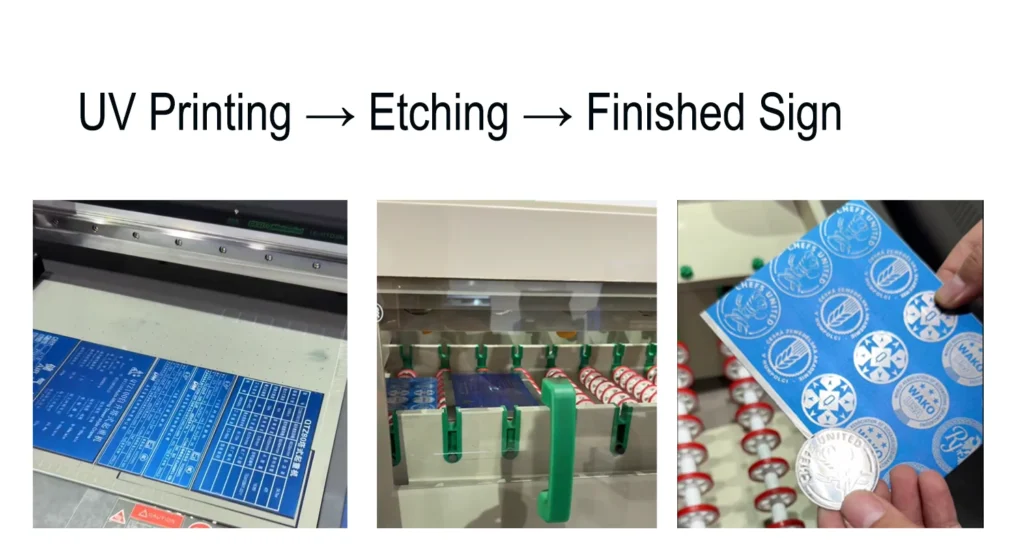
UV Printing → Etching → Finished Sign
How Does Corrosion-Resistant Sign Printing Work?
The production process is simple:
Step 1: Prepare the Aluminum Plate
The commonly used material is
- Aluminum sheet
Before printing, the aluminum surface should be clean and free from oil, dust, or contamination to ensure good ink adhesion.
Step 2: Print Corrosion-Resistant Blue Ink with a 6090 UV Printer
The design is directly printed onto the aluminum plate.
The UV printer prints:
- Text
- Logos
- Serial numbers
- Custom patterns
The special blue ink forms a corrosion-resistant layer.
Compared with traditional methods, this process does not require the following:
- Plate making
- Screen printing
- Exposure
- Developing
This greatly reduces preparation time and makes customized production easier.
Step 3: Etching Process
After printing, place the aluminum plate into the etching machine.
The corrosion solution removes the exposed aluminum areas while protecting the areas covered by the blue ink.
The normal corrosion depth is approximately
0.2 mm
This depth provides a clear three-dimensional effect and a high-quality appearance.
Step 4: Final Finished Aluminum Sign
After etching, the finished product can be used directly.
The final result features:
- Clear engraved details
- Durable metal structure
- Professional industrial appearance
It is suitable for:
- Equipment nameplates
- Industrial labels
- Metal identification plates
- Customized signs
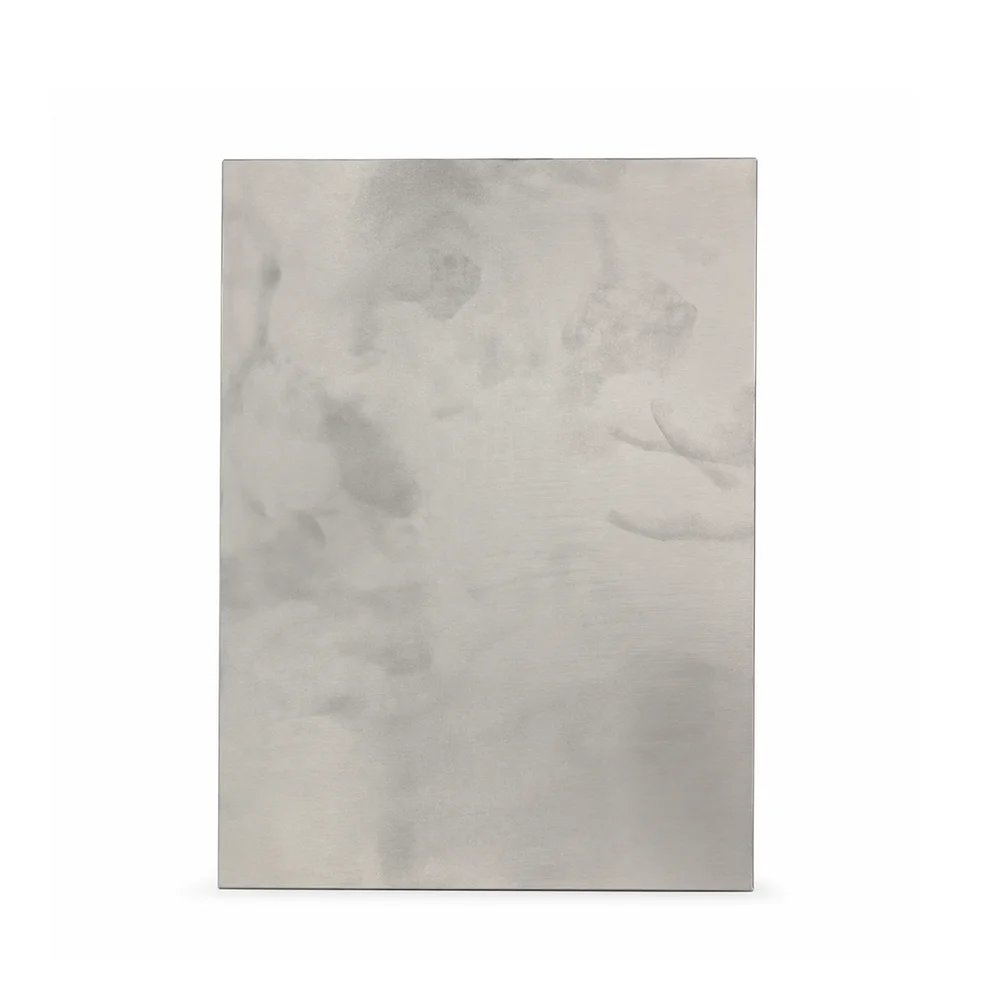
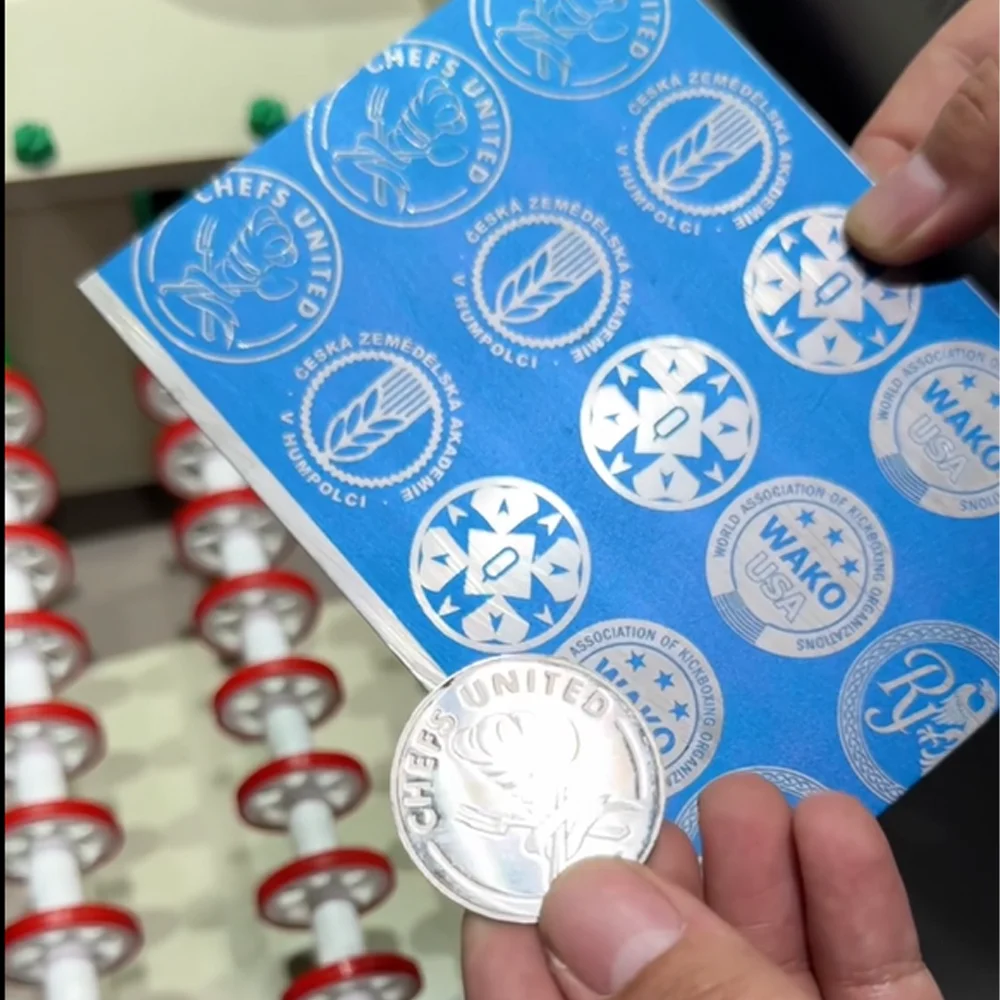
Before-and-after comparison of blue ink printing
Can One UV Printer Complete Corrosion-Resistant Sign Production?
A common question from customers is the following:
“Can I only buy one UV printer to make corrosion-resistant signs?”
The answer is:
No.
A UV printer alone cannot complete the entire corrosion process.
The complete solution requires:
- One 6090 UV Printer
- One Etching Machine
The UV printer creates the corrosion-resistant ink mask, while the etching machine performs the actual metal corrosion.
Both machines work together to complete the final product.
Why Choose a 6090 UV Printer for Corrosion-Resistant Sign Printing?
From our experience working with custom printing businesses, the 6090 UV printer provides several advantages:
1. Suitable Printing Size for Custom Metal Signs
With a printing area of:
600 × 900 mm
The machine can handle many common aluminum sign sizes.
It is suitable for:
- Small batch production
- Customized orders
- Different sign designs
2. Flexible Production Without Traditional Plate Making
Traditional corrosion sign production often requires preparing screens or plates before production.
With UV digital printing:
- Change designs immediately
- Print different orders without additional setup
- Reduce preparation cost
This is especially valuable for custom product manufacturers.
3. Better Solution for Small Printing Shops
For small businesses, order quantities are often unpredictable.
A digital UV printing solution allows manufacturers to produce the following:
- One customized piece
- Small batches
- Multiple designs in one production run
without investing in complicated preparation equipment.
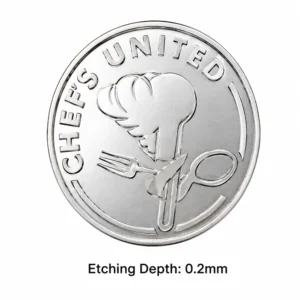
Etching Depth: 0.2mm
Practical Advice Before Starting Production
Based on our experience as a UV printer manufacturer, we recommend customers consider the following:
1. UV Printer and Etching Machine Are a complete system.
Do not evaluate only the UV printer.
The final product quality depends on the cooperation between the following:
- UV printing quality
- Corrosion-resistant ink performance
- Etching parameters
2. Test Your Aluminum Material Before Mass Production
Different aluminum plates may have differences in:
- Surface treatment
- Coating
- Adhesion performance
Always test printing and etching results before regular production.
3. Control the Etching Depth
The typical corrosion depth is around the following:
0.2 mm
However, the final appearance depends on:
- Etching time
- Chemical concentration
- Material thickness
Proper testing helps achieve consistent results.
Conclusion
Combining a 6090 UV printer, corrosion-resistant blue ink, and an etching machine provides a practical digital production solution for manufacturers looking for advanced UV printer solutions.
The UV printer replaces traditional plate-making processes by directly printing the corrosion-resistant layer, while the etching machine creates the final engraved effect.
With a 600 × 900 mm printing size and Epson i1600 printhead configuration, the 6090 UV printer is a practical choice for small printing shops and custom product manufacturers looking to enter corrosion-resistant sign production.
FAQ About Corrosion-Resistant Sign Printing
What equipment is required for corrosion-resistant sign printing?
A complete solution requires a 6090 UV printer and an etching machine. The UV printer prints corrosion-resistant blue ink, and the etching machine creates the corrosion depth.
How does the corrosion-resistant sign printing process work?
The 6090 UV printer first prints corrosion-resistant blue ink on the aluminum plate. Then, the plate is placed into the etching machine to create the final recessed sign effect.
What is the normal corrosion depth for aluminum signs?
The normal corrosion depth is approximately 0.2 mm, which creates clear details and a three-dimensional metal effect.
Can one UV printer alone make corrosion-resistant signs?
No. A complete process requires a 6090 UV printer + etching machine. The UV printer prints the protective blue ink, while the etching machine performs the corrosion process.
What material can be used for corrosion-resistant sign printing?
The most common material is aluminum plate, which is widely used for industrial nameplates, equipment labels, and customized metal signs.