

What Is Cotton vs Polyester Sock Printing?
Cotton vs polyester sock printing mainly compares how different sock materials affect ink choice, color performance, stretch, and final print quality. Cotton socks and polyester socks can both be printed, but they usually need different printing methods.
For cotton sock printing, pigment ink or cotton-friendly digital printing is often used. Cotton socks have a soft and natural feel, but the printing process may need proper drying, washing, and fixation to improve wash resistance and color stability. Traditional screen printing can also be used for simple logos, letters, and solid color designs, but it is not the best choice for gradients or very detailed artwork.
For polyester sock printing, sublimation printing is a common option, especially for white or light-colored socks with higher polyester content. It can produce bright colors, smooth gradients, and full-color designs. Polyester socks can also be printed with a 360 digital sock printer for seamless patterns, logos, and small-batch custom orders.
In short, cotton socks are better for customers who care more about softness and comfort, while polyester socks are often better for colorful designs and sublimation sock printing. The right choice depends on the sock material, artwork style, order quantity, and the final effect the customer wants.
Polyester Sock Printing with Sublimation Ink
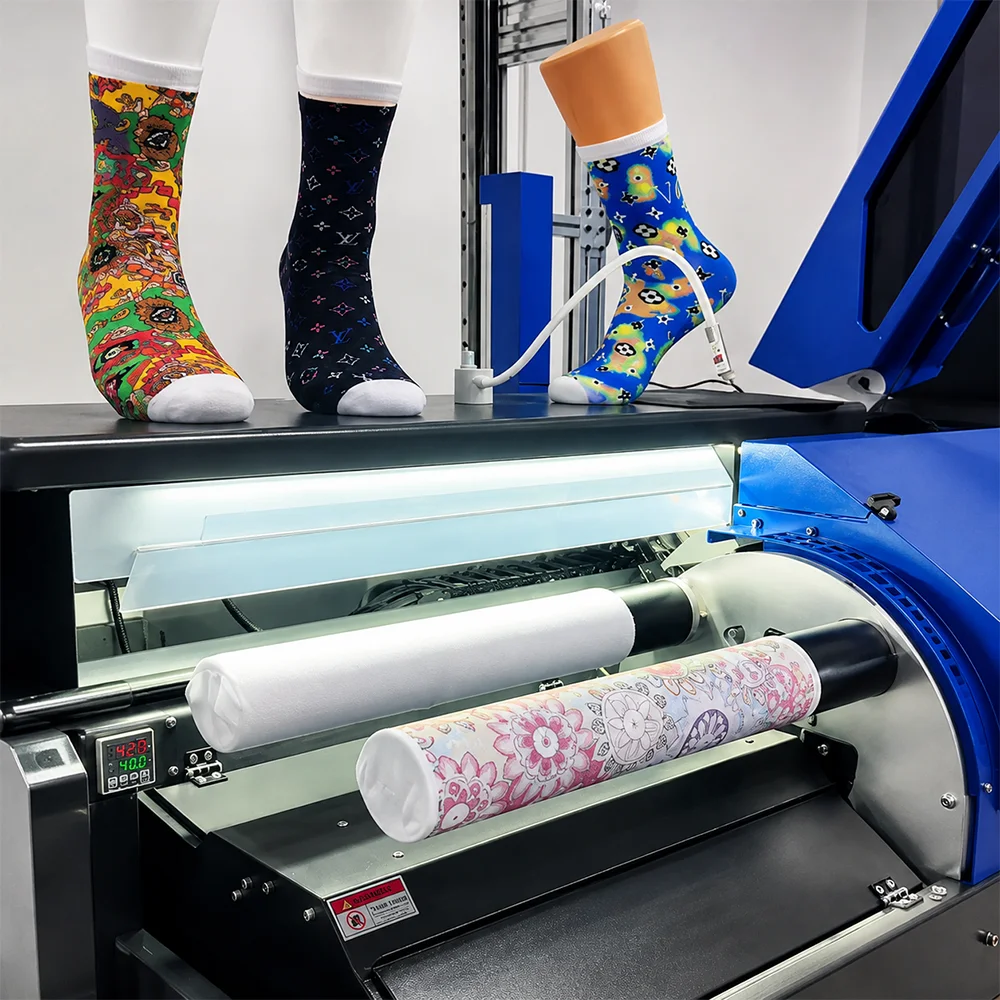
For polyester sock printing, sublimation ink is usually a good choice, especially for white or light-colored polyester socks. The sock is placed on a round sleeve, and the 360 digital sock printer prints the logo, pattern, or full-sock design directly around the sock surface.
After printing, polyester socks need heat fixation to help the color develop and stay on the fiber. Under normal production settings, the printing speed can reach about 30 seconds per sock. This makes it suitable for small-batch orders, custom logos, team socks, and full-wrap sock designs.
Compared with traditional heat transfer socks, 360 digital sock printing can create a more seamless look. The design connection is cleaner, the pattern is more complete, and there are no obvious press marks on the sides of the sock. It also gives better flexibility for different artwork, such as logos, gradients, graphics, and personalized patterns.
For best results, light-colored polyester socks are usually recommended. Dark sock bases may affect color brightness, and ink control is important to keep the sock soft and breathable after printing.
Cotton Sock Printing with Pigment Ink
For cotton sock printing, there are two common ink choices: pigment ink and reactive ink. Both can be used on cotton socks, but the workflow and production cost are different.
Pigment ink sock printing is usually easier for daily production. It does not need the long steaming and washing process required by reactive ink. The process is simpler, the production cycle is shorter, and it is more suitable for small-batch custom cotton socks.
Pigment Ink Printing Process for Cotton Socks
Pigment ink sock printing is a simple and practical process for cotton socks. It usually does not need the long steaming and washing steps required by reactive ink printing.
Step 1: Pretreatment
The cotton socks are prepared before printing. This helps the pigment ink stay better on the fabric surface and improves the final print effect.
Step 2: Printing
The logo, pattern, or custom design is printed directly onto the cotton sock surface with pigment ink.
Step 3: Drying
After printing, the socks are dried and fixed. This step helps the printed design become more stable for daily use and washing.
This shorter workflow makes pigment ink a practical choice for cotton sock printing, especially for small-batch custom orders and flexible production.
Pigment ink is a practical choice for cotton socks because it helps reduce production steps, lowers process complexity, and avoids extra wastewater treatment. For regular production, the speed is usually introduced as about 30 seconds per sock, although the actual speed may vary slightly depending on the sock material and design coverage.
Reactive Ink Printing Process
Step 1: Pretreatment
The cotton socks need pretreatment before printing.
Step 2: Printing
The design is printed onto the sock with reactive ink.
Step 3: Steaming
The socks need steaming to help the ink react with the cotton fiber.
Step 4: Washing
After steaming, the socks need washing to remove unfixed ink and chemicals.
Step 5: Final Drying
The socks are dried again after washing.
Reactive ink can produce good color, a soft hand feel, and strong wash fastness. However, the process is longer and requires more equipment, such as steaming and washing systems. For many small-batch cotton sock printing orders, pigment ink is often easier to manage.
Sublimation Ink vs Pigment Ink for Sock Printing
Sublimation ink and pigment ink are used for different sock materials. One is not always better than the other. The right choice depends on the sock fabric, design style, and final print effect.
Sublimation ink is usually used for polyester socks, especially white or light-colored socks with a higher polyester content. It can produce bright colors, smooth gradients, and soft-feel prints. This makes it a good choice for colorful patterns, photo-style designs, and full-sock artwork.
Pigment ink is more suitable for cotton sock printing. It works well with cotton fibers and has a simpler production process than reactive ink. Pigment ink sock printing is easier to manage for small-batch orders, custom logos, and flexible sock designs.
For most printing businesses, the best solution is to choose the ink based on the sock material: sublimation ink for polyester socks, and pigment ink for cotton socks.
Which Socks Are Best for Sublimation Printing?
The best socks for sublimation printing are usually white or light-colored socks with a high polyester content. Polyester fibers can absorb sublimation ink better during heat fixation, so the final print can show brighter colors, smoother gradients, and clearer details.
If the polyester content is too low, the color may look weaker after printing. The design may also lose some brightness after heating or washing. For this reason, socks with higher polyester content are usually recommended for sublimation sock printing.
Cotton socks are not the best choice for regular sublimation printing. Cotton fibers do not hold sublimation ink in the same way as polyester. For cotton sock printing, pigment ink is usually a better option.
How Sock Material Affects Color and Stretch
Sock material has a direct effect on print quality. Different fibers absorb ink in different ways, so the same design may look different on cotton socks and polyester socks.
Polyester socks usually show brighter colors, especially when used with sublimation ink. Cotton socks often have a softer feel, but the color may look more natural and less glossy. The final result depends on the ink type, fabric structure, and heat fixation process.
Stretch is also important for sock printing. When a sock is worn on the foot, the fabric expands. If the material, ink, or printing method is not suitable, the design may look lighter, show white gaps, or lose some detail after stretching.
A good sock material can help the printed pattern stay clearer, feel softer, and keep better wash resistance. This is why choosing the right sock material is just as important as choosing the right sock printer.
Can a 360 Digital Sock Printer Print Both Cotton and Polyester Socks?
Yes. A 360 digital sock printer can print both cotton socks and polyester socks, but the ink and process should match the sock material.
For polyester socks, sublimation ink is usually used. For cotton socks, pigment ink is a better choice. The final result depends on the sock fabric, ink type, artwork, and heat fixation process.
This is why material testing is important before bulk production. The right setup helps keep the color, stretch, and print quality more stable.
How to Choose the Right Socks for Your Printing Business
The right sock material depends on your product style and target customer. If you want bright colors, rich patterns, and full-sock designs, polyester sock printing is usually a better choice. Polyester socks work well with sublimation ink and can show stronger color performance.
If your customers care more about softness and a natural wearing feel, cotton sock printing can be a good option. Cotton socks are usually printed with pigment ink, which is suitable for logos, simple patterns, and small-batch custom designs.
For sports teams, clubs, or athletic brands, you can also read our guide on custom sports sock printing to see how different sock designs are used for team socks, event socks, and branded sports socks.
Learn More About Our Sock Printer Machine
If you want to test cotton socks, polyester socks, or different sock materials, choosing the right printing setup is important. Different materials need different ink choices and heat fixation processes.
Our sock printer machine is designed for flexible sock printing applications. It can help businesses test different sock materials, create custom designs, and produce small-batch sock orders more easily.
You can learn more about the machine configuration, ink options, and printing solutions on our sock printer product page.