

Table of contents
In today’s digital printing market, new printer models emerge every year, and businesses require different solutions for different products. Two popular options are UV flatbed printers and DTF printers. Although their names may sound similar, UV flatbed vs DTF printers operate in very different ways, each suited for specific printing needs.
UV Printer vs UV DTF Printer: Key Differences You Should Know
A UV printer prints directly onto the surface of products such as acrylic, glass, metal, plastic, wood, leather, and phone cases. A UV DTF printer prints the design onto AB film first, then transfers the printed image onto the product surface. The main difference is the printing process: UV printing is direct printing, while UV DTF printing is transfer printing.
How a UV DTF Printer Works
The working principle of a UV flatbed printer is a non-contact digital inkjet printing technology. Its core lies in the combination of inkjet printing and UV light curing. This allows designs to be printed directly onto various material surfaces and instantly dried.
Principle of DTF (Direct to Film) Printer
A DTF printer works by first printing a design onto a special PET release film. The printed design is then coated with adhesive powder and cured, followed by heat transfer onto the target material. This process, also known as white ink heat transfer, uses high temperature and pressure to transfer the ink from the film to the substrate. The heat and pressure cause the ink to sublimate and embed into the material’s surface. In essence, the design is prepared on a separate medium first and then applied to textiles or other surfaces via heat pressing。
DTF printing is widely used for dark-colored garments and various synthetic fabrics, such as sweatshirts, sportswear, and canvas bags, providing vibrant, durable prints.
UV Printer vs UV DTF Printer Comparison
| Item | UV Printer | UV DTF Printer |
|---|---|---|
| Printing Method | Prints directly on the product surface | Prints on AB film first, then transfers to the product |
| Main Process | Direct UV inkjet printing with LED UV curing | Film printing, lamination, transfer, and peeling |
| Suitable Products | Acrylic, glass, metal, wood, PVC, leather, phone cases, signs | Glass, plastic, packaging, gifts, bottles, labels, irregular surfaces |
| Best For | Direct printing on flat or rigid materials | Crystal labels, small logos, packaging decoration, transfer applications |
| Durability | Strong adhesion when the material and ink match well | Good for decorative labels and flexible transfer use |
What is a UV Printer?
A flatbed digital printer prints directly on rigid or flat surfaces. It adopt ultraviolet light to cure UV ink. Bonds strongly, creating durable and high-quality results.
How it works:
Step 1: Create the design.
Step 2: Place the product on the flatbed platform.
Step 3: Start printing with UV ink.
Step 4: Let the UV lamp cure the ink instantly.
This process delivers sharp colors and long-lasting prints.
What is a UV Roll-to-Roll Printer?
A UV roll-to-roll printer is a UV printer designed for flexible roll materials such as film, stickers, labels, soft packaging, and decorative transfer materials. Instead of placing rigid products on a flatbed, the material is fed through the printer in rolls, making it suitable for continuous label and film production.
In the UV printer vs UV DTF printer comparison, a UV roll-to-roll printer can be considered one type of UV printing equipment, while a UV DTF printer is mainly used for printing on AB film and transferring the design onto different product surfaces.
DTF Printer Workflow
Step 1: Print the design
- Print the design onto a special PET release film: first the colors, then a layer of white ink.
Step 2: Apply powder and cure
- Sprinkle hot-melt powder onto the white ink, then dry it to let the powder adhere and form a hot-melt layer.
Step 3: Heat transfer
- Place the film with the design onto the garment, apply heat and pressure, then peel off the release film. The design is transferred onto the garment.
Key Differences Between UV Printer and UV DTF Printer
1. Print Process
A flatbed digital printer prints directly on the product. The UV DTF printer uses film transfer. Flatbed printers suit flat and rigid products like phone cases, signs, and key chains. UV DTF printers handle curved surfaces such as bottles, mugs, and glassware.
2. Print Quality
A flatbed digital printer gives stronger and more durable prints. UV lamps cure ink directly on product, resistant to peeling or scratching. UV flatbed printers also offer precise X and Y printing, ensuring accuracy. With UV DTF printing, the transfer process may reduce durability, and manual application can cause errors.
3. Applications
UV flatbed printer applications:
- Advertising signs
- Metal and glass panels
- Interior decoration
- Phone cases
DTF printer applications
DTF printing is widely used for dark-colored garments and various synthetic fabrics, such as sweatshirts, sportswear, and canvas bags, providing vibrant, durable prints.
Cost
A flatbed digital printer costs more. It handles large volumes and professional-grade production. A DTF printer costs less and fits home use or small businesses.
Which Printer Should You Choose?
Both printers have unique strengths. A flatbed digital printer offers excellent quality, speed, and durability for large-scale businesses. A UV DTF printer offers low cost and flexible printing for small shops or startups.
When choosing between them, think about your business goals and budget. If you need mass production with high quality, go for a flatbed digital printer. If you want affordable printing for small batches or curved products, a UV DTF printer is a smart option.
For small products, samples, phone cases, cards, and custom gifts, an A3 UV printer is a compact desktop UV flatbed printer for short-run customization.
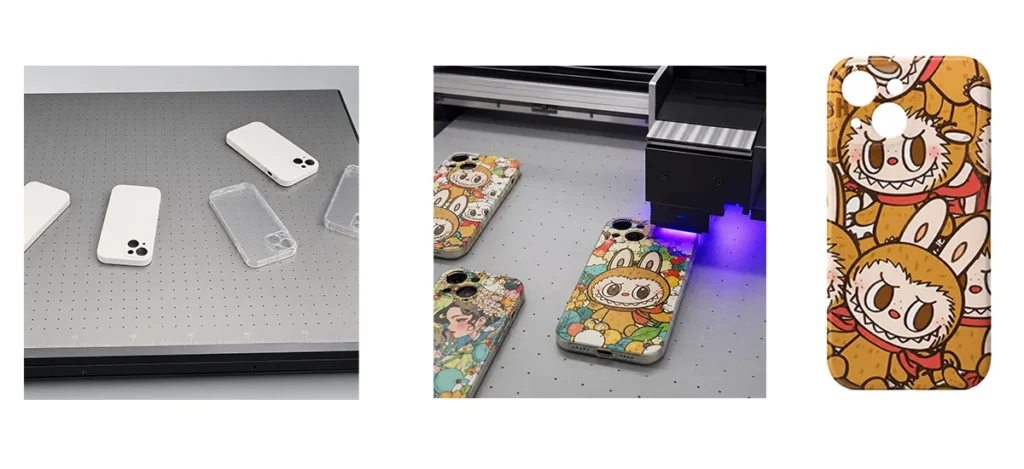
Direct UV Printer Process
Direct UV printing is a simple process for custom phone case printing. The phone cases are placed one by one into a dedicated phone case jig on the 6090 UV flatbed printer. After the artwork is prepared on the computer, the UV printer prints the design directly onto the phone case surface.
During printing, white ink, color ink, and varnish can be printed in one pass. The built-in UV curing lamp dries the ink immediately, so no plate making or complicated setup is required. The finished phone cases show bright colors, clear details, a slight raised texture, and a glossy surface effect.
Design → Product on flatbed → Direct UV printing → UV curing → Finished product
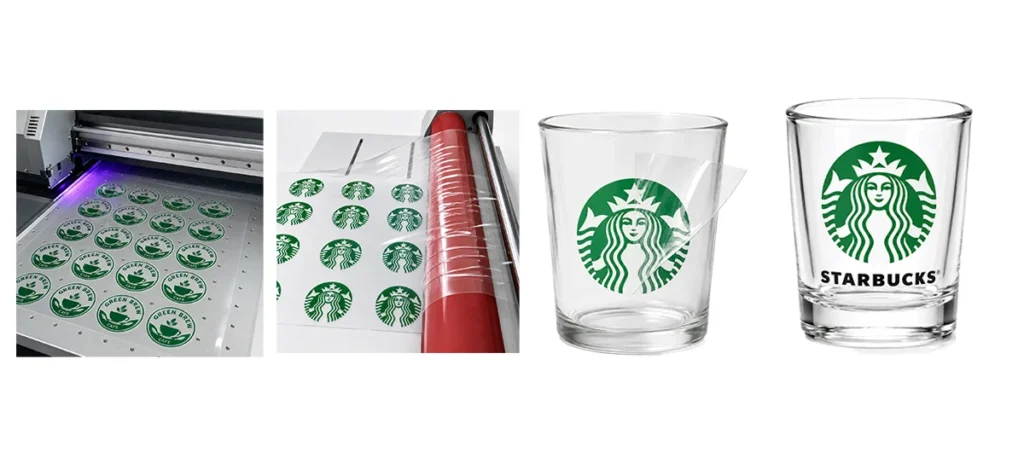
UV DTF Printer Process:
Design → Print on AB film → Lamination → Transfer → Peel film → Finished label
Conclusion
The flatbed digital printer and UV DTF printer both bring value to the printing industry. One focuses on direct, durable printing. The other focuses on flexibility and lower cost. Know your business needs before making your investment. This way, you pick the right printer without wasting money.
FAQ About UV Printer vs UV DTF Printer
What is the main difference between a UV printer and a UV DTF printer?
A UV printer prints directly onto the product surface, such as acrylic, wood, leather, metal, glass, or phone cases. A UV DTF printer prints the design onto AB film first, then transfers the printed label onto bottles, cups, packaging, curved surfaces, or small logo areas.
Which is better, a UV printer or a UV DTF printer?
It depends on your products. A UV printer is better for direct printing on flat or slightly raised products. A UV DTF printer is better for transfer labels, curved surfaces, small logos, and products that are difficult to place directly on a flatbed printer.
Can a UV printer print phone cases directly?
Yes. A UV flatbed printer can print phone cases directly by placing the phone cases into a dedicated jig. White ink, color ink, and varnish can be printed together, and the UV lamp cures the ink immediately after printing.
What products are suitable for UV DTF printing?
UV DTF printing is suitable for bottles, cups, gift boxes, cosmetic packaging, glass products, plastic items, curved surfaces, and custom logo labels. It is often used for crystal labels, transfer stickers, and small brand logos.
Are direct UV printing and UV DTF printing different machines?
They are different UV printing methods. Direct UV printing prints the design directly onto the product surface. UV DTF printing prints the design onto AB film first, then transfers the printed label onto the product. The right method depends on the product shape, material, and application.